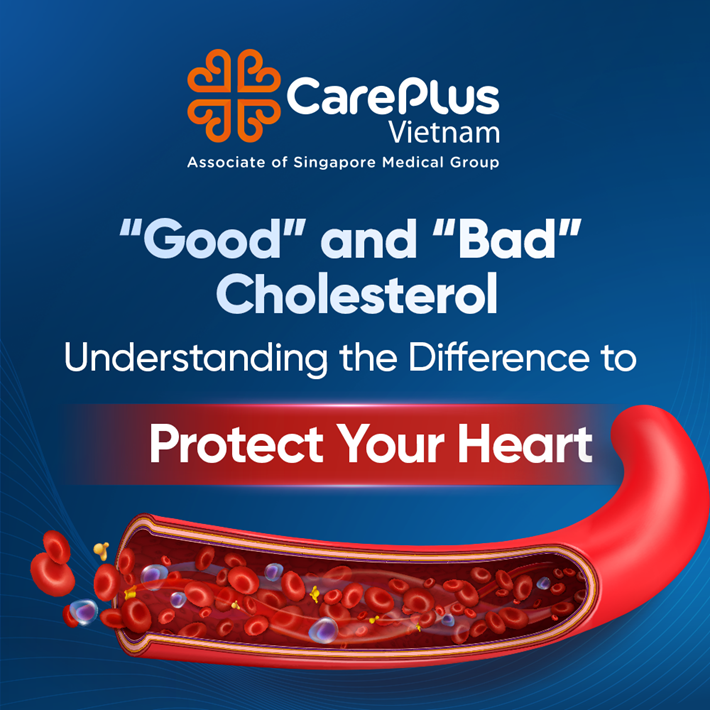
“Good” and “Bad” Cholesterol: Understanding the Difference to Protect Your Heart
1/29/2026 10:27:49 AM
1. What Is Cholesterol? What Do “Good” and “Bad” Mean?
Cholesterol is an essential lipid that plays a vital role in hormone synthesis, vitamin D production, and the formation of cell membranes.
Because cholesterol is not soluble in blood, it is transported in the circulation by particles known as lipoproteins.
The two most clinically important types are:
- Low-density lipoprotein cholesterol (LDL-C), commonly referred to as “bad cholesterol,” which transports cholesterol from the liver to peripheral tissues.
- High-density lipoprotein cholesterol (HDL-C), commonly referred to as “good cholesterol,” which removes excess cholesterol from tissues and arterial walls and returns it to the liver for metabolism and excretion.
The terms “good” and “bad” are simplified descriptions.
From a medical perspective, LDL-C is the primary causal factor in atherosclerosis, significantly increasing the risk of myocardial infarction and stroke.
Large-scale clinical trials have consistently demonstrated that higher and more prolonged exposure to elevated LDL-C is associated with a proportionally higher cardiovascular risk.
2. Harmful Effects of “Bad” Cholesterol (LDL-C)
When LDL-C levels are elevated, cholesterol infiltrates the arterial wall, undergoes oxidation, and contributes to the formation of atherosclerotic plaques.
These plaques narrow and stiffen the arteries. Plaque rupture can lead to acute thrombosis, resulting in heart attack or stroke.
Extensive evidence shows that lowering LDL-C reduces cardiovascular risk in a dose-dependent manner, regardless of whether a patient has established cardiovascular disease.
Therefore, LDL-C reduction is the primary therapeutic target in the management of dyslipidemia, as recommended by major international guidelines.
3. Is “Good” Cholesterol (HDL-C) Always Beneficial?
HDL-C facilitates reverse cholesterol transport by removing excess cholesterol from arterial walls and delivering it back to the liver, a mechanism that contributes to vascular protection.
However:
- Pharmacologic strategies aimed solely at increasing HDL-C (e.g., niacin, CETP inhibitors) have not consistently demonstrated cardiovascular benefit.
- Some studies suggest that very high HDL-C levels may be associated with adverse outcomes in certain populations.
Therefore, the goal should not be to increase HDL-C at all costs. Instead, clinical management should focus on lowering LDL-C and maintaining a healthy lifestyle.
4. “Foods Containing Good or Bad Cholesterol”: A Common Misconception
No food contains HDL or LDL cholesterol.
HDL and LDL are lipoproteins produced by the liver. However, dietary patterns have a significant impact on blood lipid levels, particularly LDL-C.
Foods That Increase LDL-C:
- Fatty meats, fried foods, butter, full-fat cheese, whole milk
- Coconut oil and palm oil
- Processed baked and fried foods containing trans fats
Foods That Improve Lipid Profiles:
- Olive oil, canola oil, soybean oil
- Fatty fish (salmon, mackerel, herring)
- Nuts (walnuts, almonds), avocado, oats, legumes, fruits
- Foods fortified with phytosterols (~2 g/day)
Dietary cholesterol from foods such as eggs and shrimp has a relatively small impact on blood cholesterol compared with the type of fats consumed daily.
5. Natural Strategies to Lower “Bad” Cholesterol (LDL-C)
Healthy Dietary Patterns:
- Reduce saturated fats (animal fats, palm oil, coconut oil).
- Completely avoid trans fats (fast food, industrial baked goods).
- Increase soluble fiber intake (oats, legumes, fruits).
- Use unsaturated vegetable oils such as olive or canola oil.
Regular Physical Activity:
- At least 150 minutes per week of moderate-intensity exercise (brisk walking, swimming, cycling).
- Helps lower LDL-C, increase HDL-C, and improve blood pressure control.
Weight Management: For every 1 kg of weight loss, LDL-C decreases by approximately 1.3 mg/dL.
Smoking Cessation: Improves HDL-C levels and restores endothelial function.
Consultation with a Cardiologist: For appropriate evaluation, diagnosis, and individualized treatment planning based on personal risk factors.
6. Smart Daily Meal Substitutions
- Breakfast: Oatmeal with nuts and fruit (providing ~3 g of β-glucan).
- Lunch: Vegetable salad with olive oil and grilled chicken or legumes.
- Dinner: Pan-seared salmon with barley and vegetables.
Throughout the day: Consider psyllium fiber and phytosterol-containing products as advised.
Expert Message
Elevated LDL-C promotes atherosclerosis and increases cardiovascular risk.
Greater LDL-C reduction (within safe limits) leads to greater cardiovascular benefit.
HDL-C is protective, but pharmacologic elevation is not recommended.
Healthy diet, regular exercise, weight control, and smoking cessation are fundamental.
Lipid-lowering medications should be used when prescribed by a physician.
👩⚕️ If you have cardiovascular disease, diabetes, chronic kidney disease, a history of stroke, or LDL-C ≥190 mg/dL, early medical evaluation is strongly recommended for a personalized treatment plan.
📚 References: ACC/AHA, ESC/EAS, European Heart Journal, JAMA Cardiology, Nature Reviews Cardiology, Circulation (2017–2024).