BOOK AN APPOINTMENT

TRANS FAT: THE MOST HARMFUL FAT FOR HEART HEALTH
TRANS FAT: THE MOST HARMFUL FAT FOR HEART HEALTH

10/31/2025 2:41:09 PM

According to the World Health Organization (WHO):
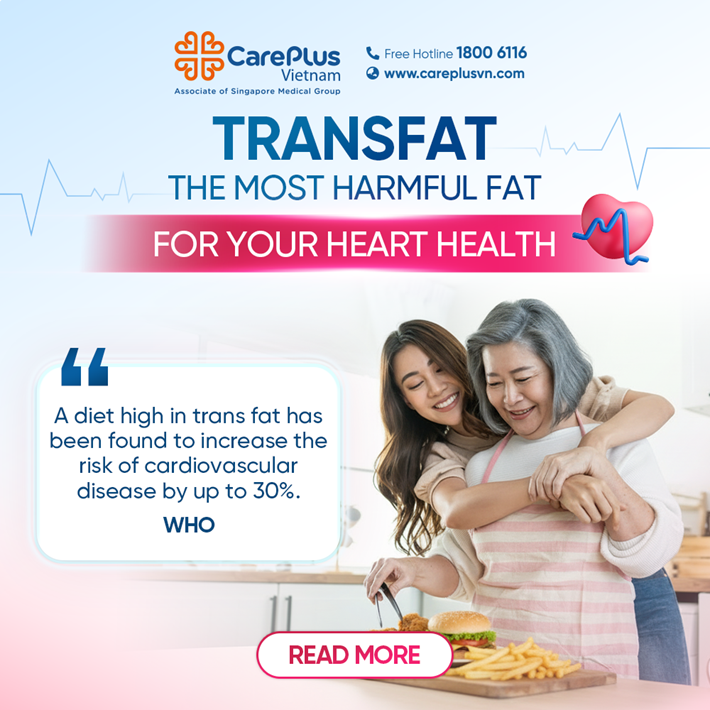
Trans fat is the most harmful type of fat for human health. Diets high in trans fats have been found to increase the risk of cardiovascular disease by up to 30%.

What Is Trans Fat?

There are two main types of fat: good fats and bad fats.
Trans fat belongs to the group of bad fats that increase the risk of heart disease. It is formed during food processing through the hydrogenation of vegetable oils — a process that helps foods last longer and look more appealing to consumers.

Where Can Trans Fat Be Found?

Trans fat exists in both natural foods and processed foods — from meats to pastries, cookies, and baked goods.
Specifically, trans fat can be found in:

  • Baked goods: crackers, cookies, cakes, pastries, and other baked foods.
  • Fast food: fried chicken, pizza, french fries, etc.
  • Deep-fried snacks: fried banana, sweet potato cakes, doughnuts, etc.
  • Processed foods: popcorn, chips, instant noodles, and similar items.
  • Shortening and margarine: various forms of vegetable butter (sticks or spreads).

How Trans Fat Harms Heart Health

Once inside the body, trans fat accumulates as plaque on artery walls.
Over time, this buildup thickens and narrows the arteries, blocking blood flow and increasing the risk of stroke.

Trans fat also raises cholesterol levels, leading to a higher chance of cardiovascular disease.
It can inhibit essential enzymes in metabolism, cause blood clots, and further raise the risk of heart attack or stroke.

Prevent Stroke by Reducing Trans Fat Intake

Be proactive in protecting your heart by reducing foods high in trans fat.
Incorporate more sources of healthy fats into your diet.
A balanced and nutritious diet not only strengthens your heart but also improves your overall quality of life.

Reference:
World Health Organization (WHO)

Recent posts

POSTERIOR THIGH PAIN? BEWARE OF A HAMSTRING TEAR
Posterior thigh pain during movement is often mistaken for a mild strain. However, it could be a sign of a hamstring tear. Learn how to recognize and treat it properly with CarePlus doctors in the article below.

By MSc, MD, Level I Specialist NGUYEN VAN HOANG TAM

SWIMMER’S EYE (POST-SWIMMING EYE IRRITATION) - HOW TO PREVENT IT THIS SUMMER
Swimmer’s Eye is a common condition after swimming, causing red, irritated, and watery eyes. Learn about its causes, symptoms, and how to protect your eyes safely while swimming with CarePlus in the article below.

By Dr. Khuong Thi Kha Ly

4 BENEFITS OF USING A RUBBER DAM IN ROOT CANAL TREATMENT
The rubber dam is a key standard for evaluating the quality of root canal treatment at any dental clinic. Join CarePlus dentists to explore four key benefits of using a rubber dam in endodontic therapy today!

By Specialist Level 1 Doctor BUI XUAN DAT

PROACTIVE GYNECOLOGICAL HEALTH SCREENING – A STRATEGIC SOLUTION TO SUPPORT A STABLE FEMALE WORKFORCE (PART 1)
Don’t let reproductive and gynecological health become the missing piece in your workforce care strategy. Proactive screening not only enables early detection of conditions but also minimizes work disruptions, enhances productivity, and helps retain female talent. Discover the 2026 trend of personalized healthcare and key strategies to build a relevant, effective program for your organization.

Related Products

Cardiovascular Diseases Screening Package - Standard
Cardiovascular diseases such as coronary artery disease, cerebral artery disease, and peripheral artery disease are showing a trend of getting younger and accounting for up to 77% of annual deaths. Therefore, screening plays a crucial role in early detection and prevention of cardiovascular diseases. Therefore, screening for cardiovascular disease is indispensable. ₫3,500,000 ₫2,800,000

Sports Cardiac Screening Package
₫4,500,000 ₫3,600,000

{{currentDoctor.Name}}
*{{ errors.first('form-1.Register name') }}
*{{ errors.first('form-1.Phone') }}
*{{ errors.first('form-1.Email') }}
Patient info:
*{{ errors.first('form-1.Patient name') }}