🌞 ENJOY THE SUMMER – BUT DON’T FORGET TO WATCH OUT FOR FOOD POISONING IN CHILDREN!
6/23/2025 9:37:54 AM
🌞 ENJOY THE SUMMER – BUT DON’T FORGET TO WATCH OUT FOR FOOD POISONING IN CHILDREN!
Summer is the perfect time for children to enjoy outdoor fun, beach trips, picnics, and delicious local foods with the family. But just one episode of food poisoning can turn that "dream vacation" into a nightmare.
Let’s explore food poisoning in children with Dr. Tran Thi Tu Hang – Pediatric Specialist at CarePlus Clinic System in today’s article.
1. What is food poisoning?
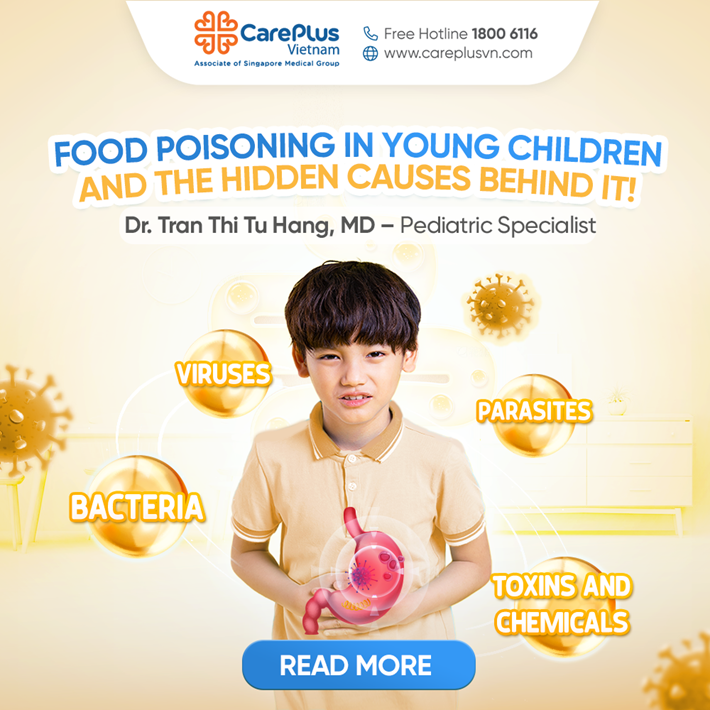
- Doctors often use the term "food poisoning" to describe an illness that develops shortly after consuming contaminated food or drink. Contamination may be caused by bacteria, viruses, parasites, or toxins.
- Children usually develop diarrhea or start vomiting within a few hours of exposure to the virus.
- Most cases resolve on their own within a few days without long-term issues. However, dehydration is the most common and serious complication of food poisoning.
2. What causes food poisoning?
2.1. Bacteria
-
Campylobacter
-
Salmonella
-
Escherichia coli (E. coli)
-
Listeria
-
Shigella
-
Clostridium perfringens
2.2. Viruses
-
Norovirus
-
Rotavirus
2.3. Parasites
-
Cryptosporidium
-
Entamoeba histolytica
-
Giardia
2.4. Toxins and chemicals
-
Some bacteria produce toxins that can contaminate food, even if the bacteria themselves are no longer present. For example, Staphylococcus aureus can contaminate cream-based foods, and its toxin can cause food poisoning.
3. What are the signs and symptoms of food poisoning?
-
Symptoms of food poisoning in children may include:
-
Nausea
-
Vomiting
-
Abdominal cramps
-
Diarrhea
-
Fever
-
Headache and fatigue
-
Vomiting typically lasts 1–2 days but can persist longer.
Diarrhea often continues even after vomiting has stopped and may last several days or more.
⚠️ Dehydration is a serious concern. Seek medical attention immediately if you suspect dehydration. Signs of dehydration in children include:
-
Refusing to eat or breastfeed
-
Lethargy or drowsiness
-
Persistent vomiting
-
Seizures
-
Constant crying or irritability
-
Dry lips
-
Sunken eyes
-
No tears when crying
-
Excessive thirst
-
Decreased or no urination
4. How is food poisoning treated?
In most cases, food poisoning goes away on its own. However, for more serious bacterial infections, antibiotics may be prescribed. Children with severe dehydration may require hospitalization and intravenous (IV) fluids.
5. How to care for a child with food poisoning?
-
To help your child feel better while recovering:
-
Encourage plenty of rest
-
Keep them well-hydrated
-
Offer small, frequent sips of fluids
-
Avoid greasy or overly sweet foods
-
Serve small meals throughout the day
-
Avoid giving over-the-counter anti-diarrheal medications unless advised by a doctor, as they may prolong symptoms
6. How can food poisoning be prevented?
To reduce the risk of food poisoning in your family:
-
Wash hands regularly—especially after using the bathroom, before handling food, and after touching raw ingredients
-
Clean all utensils, cutting boards, and food prep surfaces thoroughly
-
Avoid unpasteurized milk and products made from it
-
Wash all raw fruits and vegetables that you don’t peel
-
Keep raw meat, poultry, and seafood separate from other foods until fully cooked
-
Use perishable or near-expiry foods as soon as possible
-
Cook all animal products thoroughly
-
Store leftovers promptly in sealed containers
-
Discard expired or suspicious-smelling food
⚠️ If you are pregnant, avoid: Raw or undercooked meat and seafood, Smoked seafood, Raw eggs and foods containing raw eggs, Unpasteurized milk or juice, Pâtés, Pre-made salads, Deli meats and sausages