THE MEDITERRANEAN DIET - IS IT SUITABLE FOR VIETNAMESE PEOPLE WITH CHRONIC DISEASES?
Should Vietnamese people with chronic diseases follow the Mediterranean diet? Join CarePlus doctors as we explore its health benefits and how to adapt it to suit Vietnamese cuisine in the article below.
8/20/2026 11:25:05 AM
🥗 In recent years, the Mediterranean diet has been recommended by numerous health organizations and nutrition experts worldwide for its health benefits, particularly in preventing and supporting the treatment of chronic diseases. However, many people still wonder: can Vietnamese individuals, especially those living with chronic conditions, actually follow it?
1️⃣ What is the Mediterranean diet?
The Mediterranean diet is the traditional eating pattern of people living in countries along the Mediterranean coast, such as Greece, Italy, Spain, and France. It is not a strict diet with a fixed menu, but rather an eating model based on general principles of food choices and lifestyle.
🌿 The defining features of this diet include prioritizing green vegetables, fresh fruits, legumes, whole grains, nuts, and fats from olive oil; consuming fish and seafood more often than red meat; and limiting red meat, processed foods, and sugary beverages. Alongside their diet, people in the Mediterranean region also maintain an active lifestyle, exercise regularly, and spend time enjoying meals together with family.
Some typical dishes of the Mediterranean diet include Greek salad, made with tomatoes, cucumber, olives, and feta cheese; grilled fish served with olive oil and vegetables; lentil soup; and hummus, a spread made from mashed chickpeas, typically eaten with whole-grain bread and fresh vegetables. What these dishes have in common is the use of fresh, minimally processed ingredients and a balance among food groups.
2️⃣ Why is the Mediterranean diet recommended?
❤️ Over the past several decades, the Mediterranean diet has been one of the most extensively studied eating patterns in the world. Numerous studies show that people who follow this diet have a lower risk of cardiovascular disease, hypertension, type 2 diabetes, obesity, and other chronic conditions compared to those with less healthy eating habits.
3️⃣ How should people with chronic diseases apply it?
Vietnamese people can fully apply the principles of the Mediterranean diet to their daily meals without having to replicate the exact menus of European countries.
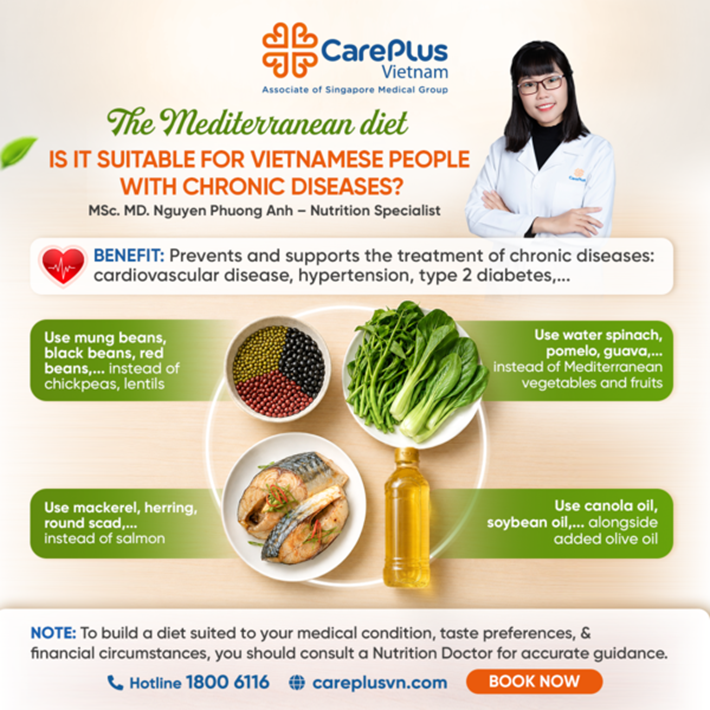
🥬 For instance, instead of legumes like chickpeas or lentils, Vietnamese people can use mung beans, black beans, red beans, or other locally available legumes. The vegetables and fruits characteristic of the Mediterranean region can also be replaced with local, seasonal foods such as water spinach, bok choy, choy sum, broccoli, guava, pomelo, orange, dragon fruit, or papaya.
🫒 As for cooking oil, extra virgin olive oil offers distinctive nutritional value thanks to its high content of oleic acid and natural antioxidant compounds. If circumstances allow, olive oil can be used in salads or light sautéing to enrich meals. For other meals, plant-based oils such as canola oil or soybean oil remain a suitable choice and are a healthier alternative to regularly using animal fat.
🐟 Similarly, salmon is an excellent source of omega-3 fatty acids (EPA and DHA), but it is not the only option. Vietnamese sea fish such as mackerel, herring, sardines, and round scad are also valuable sources of nutrition. What matters more than choosing a specific type of fish is maintaining the habit of eating fish about 2–3 times per week.
What makes the Mediterranean diet truly valuable is not a handful of "premium" foods like olive oil or salmon, but rather the practice of choosing healthy foods, balancing portion sizes, and maintaining these eating habits over the long term.
👨⚕️ Advice from a Nutrition Doctor
There is no single diet that suits every person with a chronic disease. Each individual has a different health condition, energy needs, level of physical activity, and eating habits, so their diet must be personalized accordingly.
✅ A scientifically sound diet requires not only the right types of food but also the right amounts. Even healthy foods, if eaten in excess, can lead to excess energy intake, raise blood sugar levels, or affect weight management. Conversely, many familiar foods can still have a place in one's meals if portions are properly balanced.
Therefore, rather than trying to replicate the Mediterranean diet exactly, patients should consult a doctor or nutrition specialist to build a diet suited to their specific medical condition-one that ensures both food quality and proper portion control, while also being compatible with each family's culture, taste preferences, and financial circumstances.
💚 Don't let "eating right" become a daily burden. Let CarePlus walk this journey with you, turning every meal into a solid step forward on your path to a healthier life.
📞 Message our fanpage or call our free hotline 18006116 to book an appointment now.
CAREPLUS INTERNATIONAL CLINICS
Associate of Singapore Medical Group
Hotline: 1800 6116
Email: info@careplusvn.com
Fanpage: CarePlus Clinic Vietnam