IRON DEFICIENCY ANEMIA IN CHILDREN OFTEN HAS NO OBVIOUS SIGNS – PARENTS SHOULD NOT BE OVERCONFIDENT!
6/24/2026 11:13:55 AM
👩🏻⚕️ Let’s hear from MSc. MD. Su Thi Nhu Ngoc, Pediatric Specialist at CarePlus International Clinics, in today’s article.
Iron deficiency anemia is a common condition that affects not only young children but also adolescents, due to their increased iron requirements during growth. Common causes include inadequate nutrition, parasitic infections, and frequent infections.
However, because symptoms are often subtle, this condition can easily go unnoticed and remain untreated, potentially affecting a child’s growth, development, and academic performance. Therefore, preventing iron deficiency anemia in children deserves special attention.
1️⃣ At what ages is iron deficiency anemia most common?
📌 According to statistics, up to 27.8% of children aged 6–59 months, especially those between 6–24 months, suffer from anemia, mainly due to iron deficiency.
📌 In Vietnam, this condition is also seen in older children: 9.2% of children aged 5–9 years and 8.4% of children aged 10–14 years.
👉 This highlights an important point: Parents should pay attention not only to young children but also to older children and adolescents, as they are still at risk of iron deficiency anemia.
2️⃣ Why can older children still develop iron deficiency anemia?
• During puberty, iron requirements increase rapidly to support physical growth, muscle development, and blood volume expansion.
• Girls who have started menstruating lose iron through monthly blood loss, especially those with heavy or prolonged periods.
• Unbalanced diets: high intake of carbohydrates, sweets, and fast food, but low intake of iron-rich foods.
• Dieting for weight loss, skipping breakfast, or meals heavily focused on carbohydrates.
• In addition, older children are less likely to undergo routine anemia screening, making the condition easier to miss until symptoms become more obvious.
3️⃣ Signs of iron deficiency anemia in school-aged children
Most cases in older children present with very subtle symptoms, such as:
-
Fatigue and declining academic performance: children may tire easily, struggle to concentrate, and experience lower school performance.
-
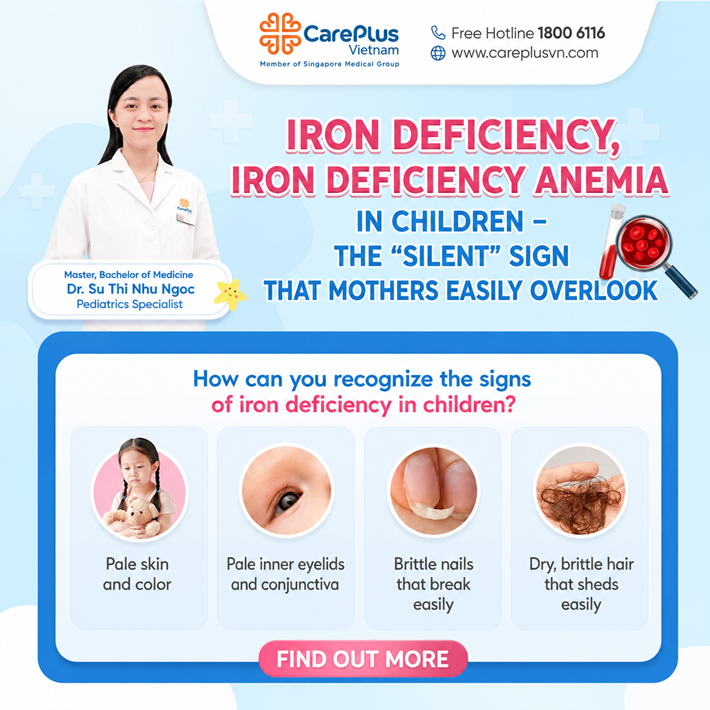
Pale skin and pale mucous membranes: most noticeable in the lips, inner eyelids, and palms.
-
Dry, brittle hair and fragile nails prone to cracking.
-
Frequent headaches, dizziness, or lightheadedness, especially when changing positions.
-
Shortness of breath during physical activity and rapid heartbeat in severe cases.
4️⃣ How to prevent iron deficiency anemia
• Maintain a balanced diet rich in iron (red meat, fish, eggs, beans, etc.).
• Increase intake of vitamin C-rich foods to improve iron absorption (citrus fruits, grapefruit, green vegetables, etc.).
• Avoid drinking milk, tea, or coffee close to mealtimes, as they can reduce iron absorption.
• For girls who have started menstruating, periodic iron supplementation may be necessary if periods are heavy or prolonged.
• Screen for anemia and iron deficiency if children show signs of fatigue, poor academic performance, or have high-risk factors.
5️⃣ Message from the doctor
Iron deficiency anemia is not just a condition affecting young children. In school-aged children and adolescents, it can silently persist and significantly impact physical health, mental well-being, and academic performance.
Early recognition, timely screening, and appropriate supplementation can help children build a strong foundation for healthy and well-rounded development.