THE RAINY SEASON IS HERE – HAS YOUR CHILD BEEN VACCINATED AGAINST JAPANESE ENCEPHALITIS?
7/20/2026 10:42:07 AM
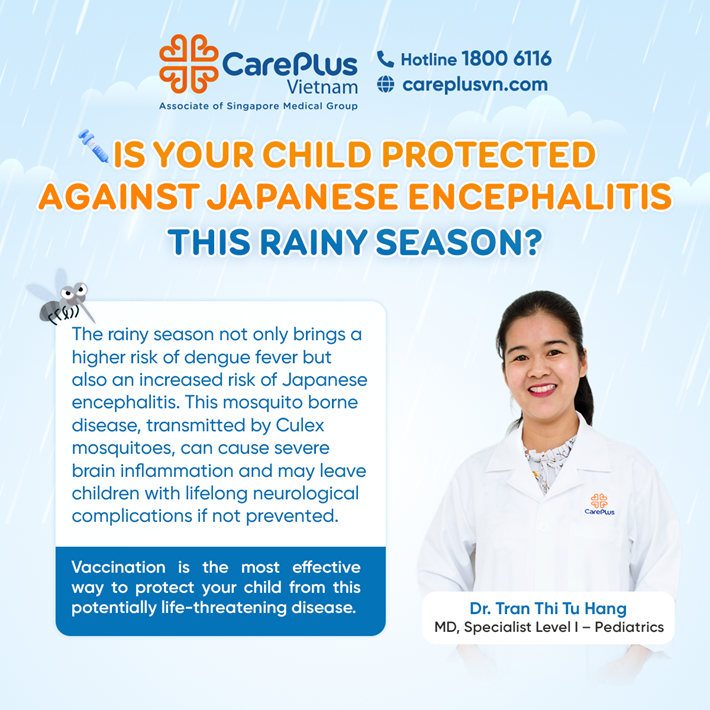
🌧 While the rainy season immediately brings dengue fever to many parents' minds, it is also a period of increased risk for Japanese Encephalitis (JE). Transmitted by the Culex mosquito, this viral disease can cause severe brain damage and leave behind debilitating, lifelong sequelae, heavily impacting a child's health and development if not properly prevented.
👩🏻⚕️ To help parents better understand this dangerous disease and effectively protect their little ones, Dr. Tran Thi Tu Hang (Spec. 1) – Pediatrics Department, CarePlus International Clinics, shares essential information about Japanese Encephalitis—ranging from recognizable signs and its severity to preventive measures, particularly complete and timely vaccination.
1️⃣ What is Japanese Encephalitis?
▪️ Japanese Encephalitis is an infectious disease caused by the Japanese Encephalitis virus (JEV), transmitted through the bite of infected Culex mosquitoes. It primarily affects children and stands as one of the leading causes of viral encephalitis in many Asian countries, including Vietnam, with approximately 100,000 clinical cases reported annually. The peak season usually spans from May to October, coinciding with the rainy season.
▶️ Consequently, the Japanese Encephalitis vaccine has been integrated into the National Expanded Program on Immunization (EPI) to safeguard children against this dangerous pathogen.
2️⃣ How Dangerous is the Disease?
▶️ The majority of JEV infections are asymptomatic or manifest only as a mild fever. However, when the virus invades the central nervous system and causes encephalitis, the consequences can be catastrophic:
▪️ The mortality (death) rate can reach up to 30%.
▪️ Approximately 30–50% of survivors suffer from long-term neurological sequelae, such as:
- Epilepsy (seizures).
- Developmental delay.
- Learning disabilities.
- Motor disorders.
- Hearing or vision loss.
3️⃣ Recognizable Signs of Japanese Encephalitis
🔔 Following a bite from an infected mosquito, the incubation period typically lasts 4–14 days before symptoms manifest.
🔸 In the initial stage (prodromal phase), children may present with mild symptoms, including:
- Fever.
- Headache.
- Abdominal pain.
- Nausea or vomiting.
🔸 However, approximately 1 in 250 infected individuals will progress to severe illness, characterized by:
- Sudden high fever.
- Severe headache.
- Neck stiffness (nuchal rigidity).
- Lethargy, somnolence, or disorientation.
- Seizures (convulsions).
- Coma.
- Paresis or paralysis of the limbs.
📢 All of the above are warning signs that require immediate transfer of the child to a medical facility.
4️⃣ Is There a Specific Treatment?
Currently, there is no specific antiviral treatment to eradicate the Japanese Encephalitis virus. Management focuses primarily on supportive care and the treatment of complications. Therefore, prevention remains the most crucial and effective strategy.
5️⃣ How to Prevent the Disease?
To protect children from the risk of Japanese Encephalitis, parents should:
✔ Ensure children receive full vaccination as recommended by the Ministry of Health.
✔ Have children sleep under mosquito nets, even during the daytime.
✔ Eliminate stagnant water sources and clear bushes to minimize mosquito breeding sites.
✔ Dress children in long-sleeved clothing when playing outdoors, especially during dusk and evening hours.
🔔 A Message to Parents
The World Health Organization (WHO) emphasizes that vaccination is the single most effective measure to prevent Japanese Encephalitis.
The rainy season is the ideal time for parents to review their child's immunization record and ensure they have received all scheduled vaccine doses. Proactive immunization today is the ultimate shield protecting your child from a dangerous disease that could alter their health and future.
CarePlus consistently maintains a comprehensive supply of pediatric vaccines, paired with an experienced team of doctors and nurses ready to advise on age-appropriate immunization schedules. Contact CarePlus to get a consultation and book your child's vaccination appointment today.
☎️ Contact our hotline at 1800 6116 or message the CarePlus Fanpage for immediate assistance and to schedule an early appointment.