BLOATING AND INDIGESTION AFTER COLONOSCOPY – WHAT CAUSES IT?
11/20/2026 4:43:32 PM
👉 Trillions of bacteria live together in each person’s gut, forming what is known as the gut microbiome. These bacteria help digest food, protect the intestinal lining, and regulate the immune system. When the gut microbiome becomes imbalanced, the risk of developing various digestive, metabolic, and neurological disorders may also increase.
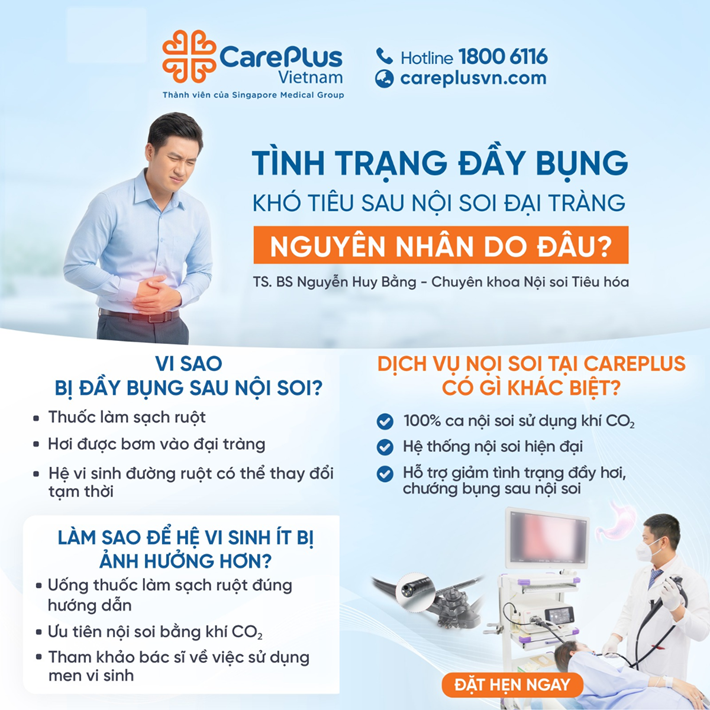
🛡 Colonoscopy is a highly effective method for screening for colorectal polyps and cancer. However, approximately 40–45% of people experience bloating, abdominal pain, or indigestion within 1–4 weeks after the procedure. One contributing factor is disruption of the gut microbiome.
❓ Why does the gut microbiome become disrupted?
Bowel preparation medications speed up bowel movements, flushing out a large number of bacteria. They can also temporarily thin the protective mucus layer lining the intestines.
During colonoscopy, air introduced into the colon brings oxygen into the intestinal environment. Meanwhile, most beneficial bacteria in the colon are anaerobic bacteria, meaning they thrive in environments without oxygen.
As a result, both the number and diversity of gut bacteria decrease, while oxygen-tolerant bacteria (Proteobacteria) temporarily increase.
✅ The good news: Most people recover naturally
In healthy individuals, the gut microbiome typically returns to its original state within 2–6 weeks. However, people with pre-existing digestive conditions (such as irritable bowel syndrome or inflammatory bowel disease) or an already imbalanced gut microbiome may take longer to recover.
💡 How can you minimize the impact on your gut microbiome?
1. Split-dose bowel preparation
Take the bowel preparation medication in two doses (the evening before and the morning of the colonoscopy), following your doctor's instructions. This approach provides better bowel cleansing and causes less disruption to the gut microbiome compared to taking the entire dose at once.
2. Choose CO₂ insufflation instead of air during colonoscopy
CO₂ is absorbed by the body much faster than regular air, helping patients experience less bloating and discomfort after the procedure.
Studies have also shown that CO₂ causes less disruption to the gut microbiome. Patients with irritable bowel syndrome or ulcerative colitis may benefit even more.
At CarePlus Medical Clinics, 100% of colonoscopy procedures use CO₂ insufflation.
3. Probiotics
Taking probiotics immediately after colonoscopy may help relieve symptoms and accelerate the recovery of the gut microbiome.
The benefits are most noticeable in people who frequently experience bloating, abdominal pain, or irregular bowel movements. For otherwise healthy individuals, probiotics are not essential, as these changes are usually temporary.
You should consult your doctor to choose the right probiotic and determine the appropriate time to take it.
⚠️ Seek medical attention promptly if you experience severe abdominal pain, fever, significant rectal bleeding, or progressively worsening abdominal distension after colonoscopy.
👉 Colonoscopy remains the "gold standard" for colorectal cancer prevention.
At CarePlus, patients undergo colonoscopy using a Full HD endoscopy system, providing clear visualization of the intestinal lining and helping detect even small lesions.
All colonoscopy procedures use CO₂ insufflation to reduce bloating and minimize disruption to the gut microbiome.
Changes in the gut microbiome after colonoscopy are generally harmless and can be minimized. So, don't put off your colorectal cancer screening!