EARLY DETECTION OF HEPATITIS B AND C MORE OPPORTUNITIES TO PROTECT YOUR LIVER
9/16/2026 9:22:38 AM
In a recent sharing, MSc. MD. CKII Dinh Thi Ngoc Minh – Gastroenterology & Hepatology Specialist helped us take a closer look at some common misconceptions about hepatitis B – a disease that can silently exist without people even knowing they have it.
But understanding hepatitis is only the first step. The more important question is: if hepatitis B or C is detected early and treated at the right time, what can change?
The answer: a lot.
🩺 Early detection creates an opportunity to accurately assess the condition, intervene at the right time, and proactively protect the liver – from reducing the risk of cirrhosis, liver cancer, serious complications and death, to reducing the risk of transmission and increasing the opportunity to live a healthier life for longer.
FOR HEPATITIS B
According to current WHO and AASLD/IDSA guidelines, appropriately indicated treatment for hepatitis B can help slow the progression of liver disease, reduce the risk of liver cancer, and improve survival.
So, what can actually change?
1️⃣ CIRRHOSIS – MAY BE PREVENTED OR SLOWED
Early detection and intervention can help control the virus before liver damage progresses further.
In some patients treated at CarePlus when early signs of liver fibrosis are present, liver damage may improve significantly.
However, once fibrosis has progressed to an advanced stage, the goal of treatment remains to control the virus and limit complications, but the possibility of returning the liver to its original condition becomes more limited.
👉 Don’t wait until cirrhosis develops before taking action. Once fibrosis has progressed to F3–F4, treatment may no longer be able to restore the liver to a completely normal state.
2️⃣ LIVER CANCER – THE RISK CAN BE REDUCED
Effective antiviral treatment can reduce the risk of liver cancer, although it cannot eliminate the risk completely.
Therefore, even when the virus is well controlled, people who remain at high risk still need regular monitoring and liver cancer screening as recommended by their doctor.
👉 Treatment for hepatitis B is not simply about lowering the viral load. The ultimate goal is to reduce the risk of serious complications in the future.
3️⃣ SURVIVAL – MAY BE IMPROVED
This is one of the most important goals of treatment.
Proper control of hepatitis B can help reduce the risk of serious complications such as cirrhosis, liver failure and liver cancer, thereby improving long-term prognosis and survival.
👉 The right treatment today can make a difference to your liver health many years from now.
4️⃣ TRANSMISSION – HELP PROTECT THE PEOPLE AROUND YOU
Detecting hepatitis B, particularly during pregnancy, allows doctors to assess the viral load and apply appropriate preventive measures when indicated.
Antiviral treatment for eligible patients, combined with appropriate preventive measures for newborns, can significantly reduce the risk of mother-to-child transmission of hepatitis B.
In addition, good viral control can also contribute to reducing the risk of transmission to others.
👉 Early detection and treatment not only protect your liver, but can also help protect the people you love.
5️⃣ TIMING – DON’T MISS THE RIGHT TIME FOR TREATMENT
Hepatitis B is a condition that can change over time.
Therefore, early detection does not mean that everyone needs immediate treatment. What matters is having the condition properly assessed, understanding the level of risk, and identifying when treatment is actually needed.
👉 Early detection helps ensure that we don’t miss the right time to intervene.
6️⃣ THE FUTURE – YOU CAN LIVE A HEALTHY LIFE WITH HEPATITIS B
People who are diagnosed early, appropriately assessed for risk, treated when indicated, and followed up regularly can reduce the risk of serious complications and maintain a healthy life in the long term.
What we can influence is not only viral control, but also:
- Reduce the risk of cirrhosis
- Reduce the risk of liver cancer
- Reduce the risk of death
- Reduce transmission
- Live healthier for longer
WHAT ABOUT HEPATITIS C?
While hepatitis B often requires long-term monitoring and management, hepatitis C has a very different story:
HEPATITIS C CAN BE CURED
1️⃣ CURE – MORE THAN 95%
Today, oral direct-acting antiviral (DAA) medications can cure more than 95% of people with hepatitis C.
This represents a major advance in modern medicine: a chronic viral infection that once carried a risk of cirrhosis and liver cancer can now be cured with highly effective oral treatment regimens.
2️⃣ TREATMENT TIME – OFTEN JUST 8–12 WEEKS
In the past, hepatitis C treatment with interferon and ribavirin often lasted much longer and was associated with numerous side effects.
Today, with direct-acting antiviral medications, many people can complete treatment within approximately 8–12 weeks, depending on the treatment regimen and their individual condition.
👉 A short course of treatment can offer a chance of cure for more than 95% of people with hepatitis C.
3️⃣ CIRRHOSIS – DON’T WAIT UNTIL THE LIVER IS DAMAGED
If left untreated, chronic hepatitis C can progress to cirrhosis over time.
Once liver damage has advanced, even after the hepatitis C virus has been eliminated, the liver may not always return to its previous normal state.
- Don’t wait for elevated liver enzymes.
- Don’t wait for symptoms to appear.
- Don’t wait until fibrosis or cirrhosis develops before seeking treatment.
🛡️ The earlier hepatitis C is detected and treated, the greater the opportunity to protect the liver.
4️⃣ LIVER CANCER – CURE DOES NOT MEAN ZERO RISK
Curing hepatitis C can significantly reduce the risk of long-term complications, including liver cancer.
However, for people who already have cirrhosis, the risk of liver cancer may persist even after hepatitis C has been cured.
👉 That is why early treatment is important, along with continued monitoring when recommended for people at risk.
5️⃣ PROGNOSIS – IT CAN MAKE A DIFFERENCE
Successful treatment of hepatitis C eliminates chronic viral infection and, in turn, reduces the risk of progression to serious liver complications.
💡 Early detection is not simply about finding a virus – it is an opportunity to change the course of the disease.
6️⃣ TRANSMISSION – CURING ONE PERSON MEANS REMOVING A POTENTIAL SOURCE OF TRANSMISSION
There is currently no vaccine to prevent hepatitis C.
Therefore, when a person is diagnosed and successfully treated, not only is their own liver protected, but a potential source of ongoing viral transmission is also eliminated.
SO, WHAT DOES EARLY DETECTION HELP US ACHIEVE?
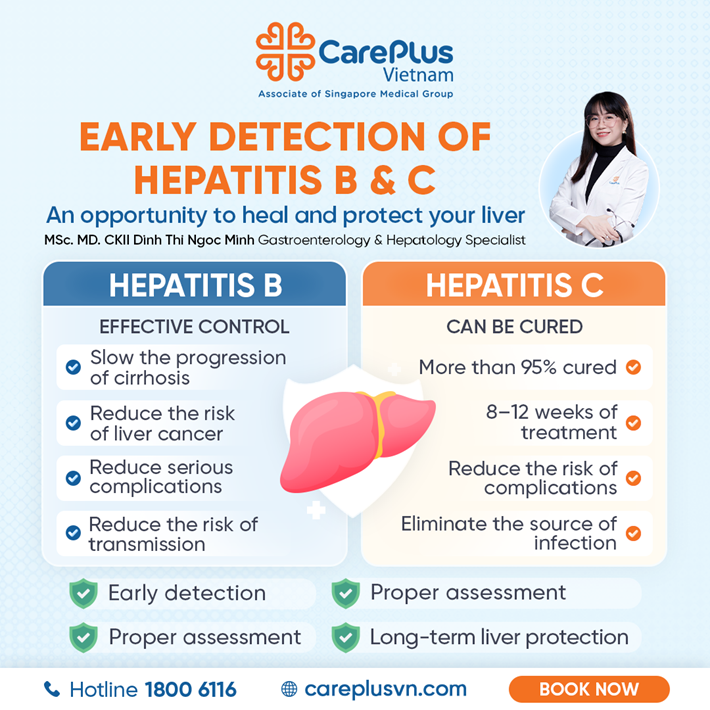
🟢 For hepatitis B, early detection gives people the opportunity to have their liver health fully assessed, monitor the course of the virus, and receive treatment when indicated. Proper disease management can help slow the progression of cirrhosis, reduce the risk of liver cancer, reduce serious complications, and improve long-term prognosis. Early detection and management can also contribute to reducing transmission, particularly when measures to prevent mother-to-child transmission are needed.
For hepatitis C, there is a very different opportunity: more than 95% of people can be cured with direct-acting antivirals (DAAs). With appropriate treatment regimens, treatment often takes only around 8–12 weeks. The earlier treatment begins, before liver damage progresses, the greater the opportunity to protect the liver and reduce the risk of long-term complications.
The important thing is not to wait until symptoms appear or the liver is already damaged before taking action. For hepatitis B and C, early detection gives us more time to properly assess the condition, choose an appropriate treatment approach, and proactively prevent complications that may develop in the future.
One check-up today can make a difference to your liver health for many years to come.
Take the initiative to get tested, understand your health status, and talk to your doctor about the right monitoring and treatment plan for you.