DON’T MISS A BEAT TO A HEALTHY LIFE - PROACTIVELY CARE FOR YOUR HEART EVERY DAY
9/29/2026 10:05:34 AM
World Heart Day (September 29) is approaching an occasion for us to listen to our own heartbeat. You exercise regularly, eat relatively healthily, experience no chest pain, no shortness of breath, no high blood pressure, and feel completely fine. Does that mean your cardiovascular health is in good shape?
Not necessarily.
Cardiovascular health doesn't always signal issues through clear symptoms. Conditions like hypertension (high blood pressure), dyslipidemia (high cholesterol), or hyperglycemia (high blood sugar) can develop silently without you feeling a thing. In fact, in some cases, the very first warning sign appears only when a cardiovascular event has already occurred.
Therefore, being symptom-free does not mean you are at zero risk.
DON’T JUST WAIT FOR YOUR BODY TO CRY OUT FOR HELP
One of the main reasons many people remain complacent about cardiovascular health is the mindset:
- "I'm still young."
- "I exercise regularly."
- "I don't have chest pain, so I must be fine."
- "I feel completely healthy."
- These thoughts often prevent us from considering heart health checks or proactive care.
In reality, doctors do not rely solely on how healthy you feel or your current lack of symptoms to assess risk. Age, blood pressure, cholesterol, blood sugar, weight, smoking habits, family medical history, and underlying conditions are all crucial puzzle pieces that provide a full picture of your overall cardiovascular risk.
So instead of asking, "Do I have any symptoms?", perhaps we should start exploring:
"What risk factors might I have that I’m not yet aware of?"
FROM AWARENESS TO ACTION: PROACTIVE SCREENING
Screening doesn't mean everyone needs to undergo an extensive battery of tests.
The key is knowing when you need a risk evaluation and where to start.
A routine health checkup can reveal hidden health metrics that daily feelings cannot detect, allowing doctors to evaluate your overall risk and advise appropriate lifestyle modifications.
Proactively speaking with a doctor is especially important if you have risk factors such as a family history of early heart disease, high blood pressure, cholesterol disorders, diabetes, overweight/obesity, smoking, or if you experience unusual symptoms like fatigue, shortness of breath, chest tightness, or palpitations.
Don't wait until your body sends a major warning signal to start caring for your heart.
WHAT SHOULD YOU DO AFTER KNOWING YOUR RISK?
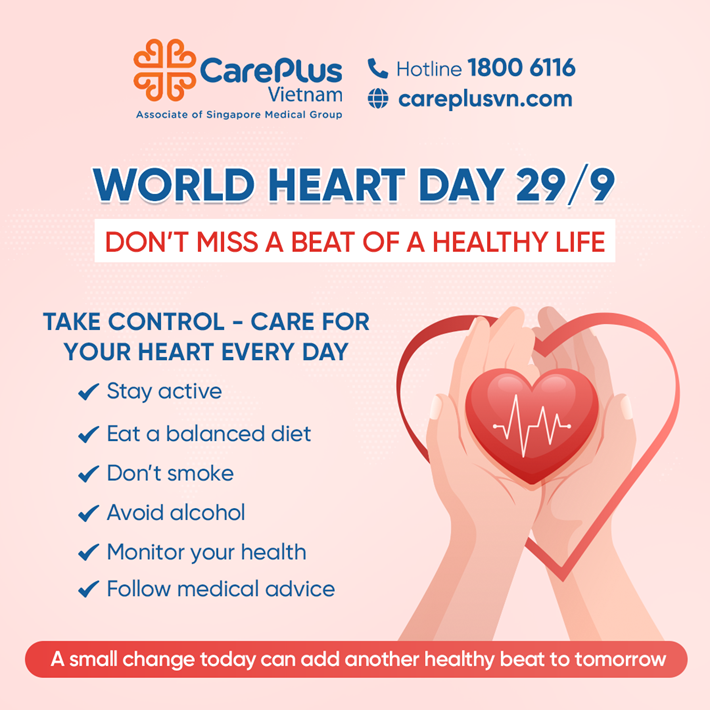
Understanding your risk is only the first step. The next critical step is maintaining a daily "rhythm" of heart care through familiar, everyday habits:
- Exercise regularly and appropriately for your fitness level.
- Eat a balanced diet, paying close attention to salt intake, saturated fats, and processed foods.
- Monitor your blood pressure, blood sugar, and cholesterol as directed by your physician.
- Avoid smoking and minimize other risk factors.
- Maintain a healthy weight and ensure adequate, quality sleep.
- Adhere strictly to treatment and attend follow-up appointments as scheduled if you are currently being treated for cardiovascular disease or risk factors.
You don't need to wait for a special day to start caring for your heart. World Heart Day (September 29) serves as a wake-up call to act today. The World Heart Federation emphasizes that the key doesn't lie in grand gestures—it is converting awareness into action through small, consistent daily changes (like staying active and sustaining a healthy lifestyle) that creates lasting, meaningful impact for your heart.
Don't miss a sign. Don't miss an opportunity to get checked. Don't miss a beat. Because every moment is precious.
Medical content reviewed by Master, Doctor Nguyen Thi Kim Vui – Specialist in General Internal Medicine & Cardiology.