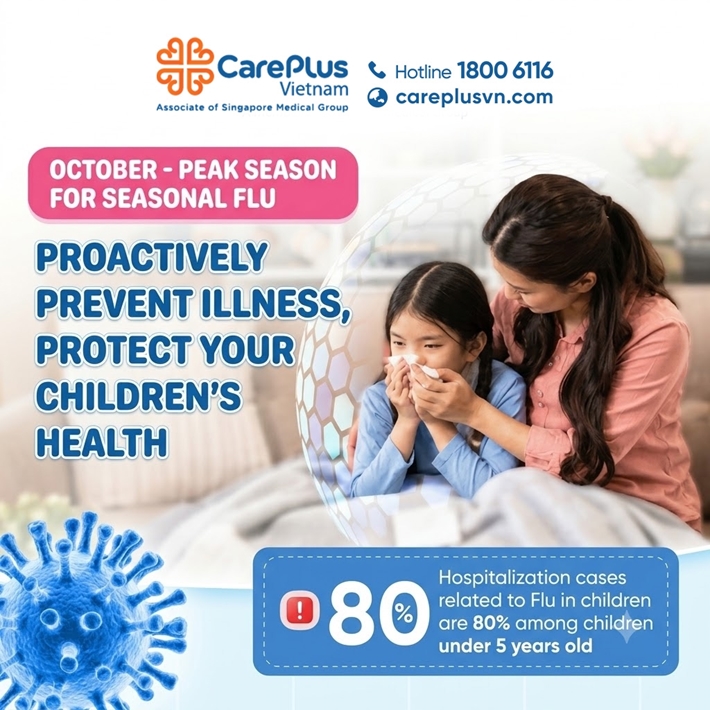
OCTOBER – PEAK SEASON FOR INFLUENZA: WHAT PARENTS CAN DO TO PROTECT THEIR CHILDREN AND FAMILY
10/8/2026 9:55:04 AM
Join Dr. Tran Thi Hoang Oanh, Pediatric Specialist at CarePlus Clinics, to learn more about influenza and how to prevent it.
In recent weeks, influenza cases have risen sharply—sometimes affecting entire classrooms or households. Influenza is an acute respiratory infection caused by the influenza virus. While often mistaken for the common cold, influenza is more dangerous and may lead to serious complications.
I. What are the symptoms of influenza?
Influenza usually starts suddenly and is more severe than the common cold. Common symptoms include:
-
High fever: Typically 39–41°C, often with chills.
-
Muscle and joint pain: General fatigue, body aches, weakness.
-
Headache: Often intense.
-
Respiratory symptoms: Dry cough, sore throat, runny or stuffy nose, mild shortness of breath.
-
Other symptoms: Eye discomfort; in children, vomiting and diarrhea may also occur.
II. Risks and complications of influenza
High fever that does not subside, persistent coughing, and severe fatigue are common in children with influenza. Beyond immediate illness, the greater concern is the risk of transmission and complications.
Many people think influenza is a minor illness that resolves within 1–2 weeks. However, its rapid spread is the real danger, especially for vulnerable groups:
-
Infants under 6 months
-
Older adults
-
Pregnant women
-
People with chronic conditions (e.g., heart disease, diabetes, asthma)
-
For these groups, influenza is not just exhausting—it can be life-threatening.
Serious complications include:
- Respiratory complications: Pneumonia is the most common and dangerous, potentially fatal. Influenza can also worsen chronic lung diseases.
- Cardiac complications: Myocarditis and pericarditis can damage the heart and may lead to heart failure.
- Multi-organ involvement: Severe cases may progress to sepsis or multi-organ failure with a high risk of death.
- Pregnancy-related risks: Influenza may cause miscarriage, stillbirth, or preterm birth.
III. How to prevent influenza and its spread
1. Annual influenza vaccination
Annual vaccination remains the most effective and essential preventive measure. It not only reduces the risk of infection and severity of symptoms but also protects high-risk groups (older adults, young children, pregnant women, and those with chronic illnesses) from serious complications.
2. Personal hygiene – breaking the chain of transmission
-
Wash hands frequently with soap and water for at least 20 seconds, especially after coughing, sneezing, before meals, and after using the restroom.
-
Cover your mouth and nose when coughing or sneezing: Use tissues and discard them immediately. If unavailable, cough or sneeze into your elbow—not your hands.
-
Wear a mask: Sick individuals should wear masks in public and when in close contact with others to reduce the spread of respiratory droplets.
-
Regularly disinfect frequently touched surfaces (e.g., doorknobs, phones). Ensure good ventilation at home and work by opening windows or improving airflow.
3. Limiting contact and isolation
- Stay home when sick: If you have influenza or flu-like symptoms (fever, cough, sore throat), stay home, rest, and avoid work, school, or public places.
- Isolation period: Remain at home for at least 24 hours after your fever subsides without medication, or until symptoms significantly improve.
- Protect vulnerable groups: Avoid close contact with infants under 6 months and older adults.
4. Strengthening immunity
Support your immune system with adequate sleep, a balanced diet rich in vitamins C, D, and zinc, and regular exercise.
In summary
Influenza is not just a common cold but a serious health threat with potentially severe consequences. To protect yourself, your family, and your community, ensure annual flu vaccination—especially for high-risk groups—alongside proper hygiene and responsible isolation when sick.