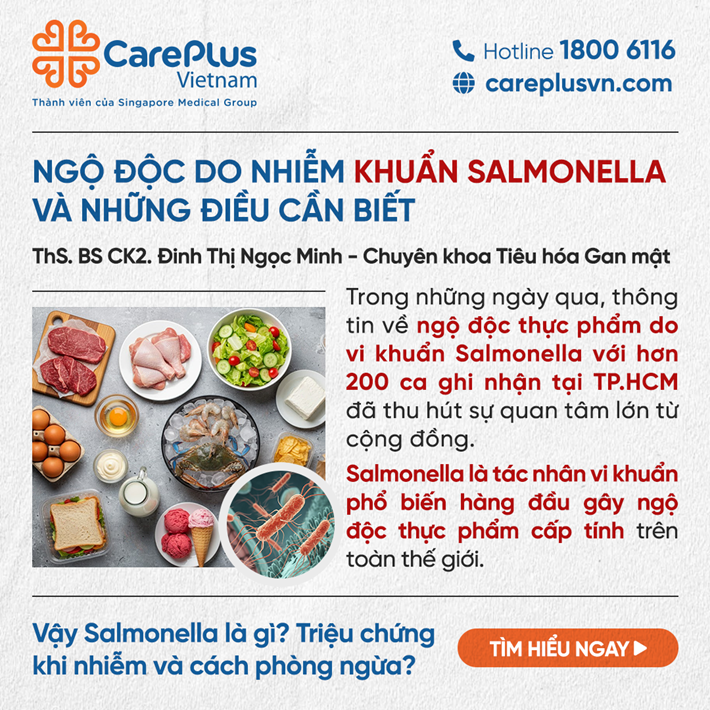
SALMONELLA FOOD POISONING AND WHAT YOU NEED TO KNOW
11/12/2025 11:40:35 AM
Medically reviewed Doctor Dinh Thi Ngoc Minh –Gastroenterology and Hepatology
In recent days, news about food poisoning caused by Salmonella, with nearly 300 recorded cases in Ho Chi Minh City, has drawn significant public attention. Therefore, it is important to understand this pathogen and the essential precautions to protect yourself and your family.
1. Suspected Agent: Salmonella
Based on clinical data and laboratory results, most patients showed symptoms of gastrointestinal infection, most likely caused by Salmonella — one of the most common pathogens responsible for foodborne illnesses worldwide.
🦠 Salmonella is a group of Gram-negative, rod-shaped, motile, facultative anaerobic bacteria that includes two main species: Salmonella enterica and Salmonella bongori. These bacteria can live in the intestines of humans and animals and are transmitted through contaminated food, water, or environmental contact.
2. Incubation Period
After consuming contaminated food or water, symptoms typically appear within 6 hours to 6 days. Because of this delay, tracing the source of infection can sometimes be difficult.
3. Clinical Symptoms
Common symptoms include:
-
Diarrhea, which may occur multiple times per day
-
Abdominal cramps, fever, nausea, or vomiting
-
Fatigue, headache, and muscle pain in some cases
In healthy individuals, the illness usually resolves on its own within 2–7 days. However, young children, the elderly, pregnant women, and immunocompromised individuals are at higher risk of severe dehydration, sepsis, or systemic complications.
4. Transmission Routes and High-Risk Foods
Salmonella spreads mainly through the digestive tract, particularly via:
-
Consuming contaminated food or drinks
-
Food handlers who are carriers or fail to wash hands properly, leading to cross-contamination
-
Poorly sanitized utensils or food-preparation surfaces
High-risk foods include:
-
Undercooked poultry, eggs, and egg-based products
-
Raw vegetables contaminated during handling
-
Pâté made from liver or minced meat that is undercooked or not properly sterilized
-
Unpasteurized milk, dairy products, and untreated drinking water
5. Food Safety Practices to Prevent Food Poisoning
To minimize the risk of foodborne infection, doctors recommend:
-
Choose reputable food establishments; ensure staff wear gloves, hairnets, and use clean, covered utensils
-
Reheat or cook fillings thoroughly before eating
-
Wash raw vegetables carefully and store in a clean, dry place to prevent cross-contamination
-
For pâté or meat fillings, heat to at least 70°C for 2 minutes
-
Keep refrigerated at ≤4°C and consume within 2–3 days after opening
-
Do not reuse pâté or fillings left at room temperature for more than 2 hours
6. Home Care for Mild Food Poisoning
⚠️ Do not self-medicate with antibiotics!
The most important step is rehydration and electrolyte replacement:
-
Use Oral Rehydration Solution (ORS) mixed exactly as directed. If unavailable, substitute with salted rice water or fresh coconut water.
-
Sip small amounts continuously instead of waiting until thirsty.
-
Use ORS within 24 hours after preparation and refrigerate if needed.
-
Consume coconut water within 1–2 hours after opening.
Dietary guidelines:
-
Temporary fasting for 6–8 hours if vomiting persists.
-
When improving, resume eating gradually with plain porridge, soft bread, or ripe bananas.
-
Avoid milk, oily or fried foods, raw vegetables, undercooked meat, or hard-skinned fruits during the first 2–3 days.
-
Consider taking probiotics to help restore intestinal flora balance.
7. When to Seek Medical Attention
‼️ Visit a healthcare facility immediately if you experience:
-
High fever >38.5°C
-
Bloody stools or diarrhea >8–10 times/day
-
Persistent vomiting, inability to eat or drink
-
Belonging to a high-risk group (young children, elderly, pregnant women, people with chronic diseases or weakened immunity)
-
Signs of severe dehydration: dry lips, sunken eyes, decreased urination, dizziness, drowsiness, or exhaustion
📞 Contact CarePlus via hotline 1800 6116 or visit the nearest medical facility for timely examination and treatment if you experience the above symptoms.