HEADACHES CAUSED BY SINUSITIS – SHOULD NOT BE TAKEN LIGHTLY
6/30/2025 10:52:03 AM
🔻 Sinusitis is an inflammation of the mucosal lining of the paranasal sinuses, caused by infections (viral, bacterial, or fungal), allergies, environmental factors, or anatomical abnormalities. One common but often overlooked symptom is persistent headaches.
Let’s explore insights shared by Dr. Lam Thanh Hao, ENT specialist at CarePlus International Clinics, to better understand the causes, symptoms, and treatment options for sinusitis.
1. Types of Sinusitis
Based on the duration of illness, sinusitis is categorized into:
- Acute sinusitis: lasts less than 4 weeks
- Subacute sinusitis: lasts between 4 and 12 weeks
- Chronic sinusitis: lasts more than 12 weeks or recurs several times a year
2. Characteristics of Headaches Caused by Sinusitis
- Location: forehead, cheeks, between the eyes, back of the head
- Nature: dull, heavy sensation, worsens when bending forward, coughing, or after waking up
- Accompanied by: nasal congestion, runny nose, reduced sense of smell, ear fullness or ringing
👉 These are distinctive signs that help differentiate sinus-related headaches from other types like migraines or tension headaches.
3. Potential Complications if Untreated
If sinusitis is not treated properly, it may lead to serious complications:
- Intracranial complications: meningitis, brain abscess, cavernous sinus thrombosis
- Ocular complications: orbital cellulitis, optic neuritis – possibly leading to vision loss
- Middle ear infections: ear pain, tinnitus, hearing loss
- Loss of smell: temporary or permanent
- Neurological and mental health impact: chronic headaches, insomnia, depression
- Reduced quality of life: persistent fatigue, decreased productivity at work or school
4. Diagnostic Methods
- Clinical examination: symptom review, sinus pressure/tenderness check
- Nasal endoscopy: safe, quick, and highly effective for diagnosis, monitoring, and treatment planning
- Sinus X-ray: detects sinus opacification or fluid levels
- CT scan: the gold standard for diagnosing sinusitis
- Nasal culture: identifies bacterial pathogens, especially in treatment-resistant cases
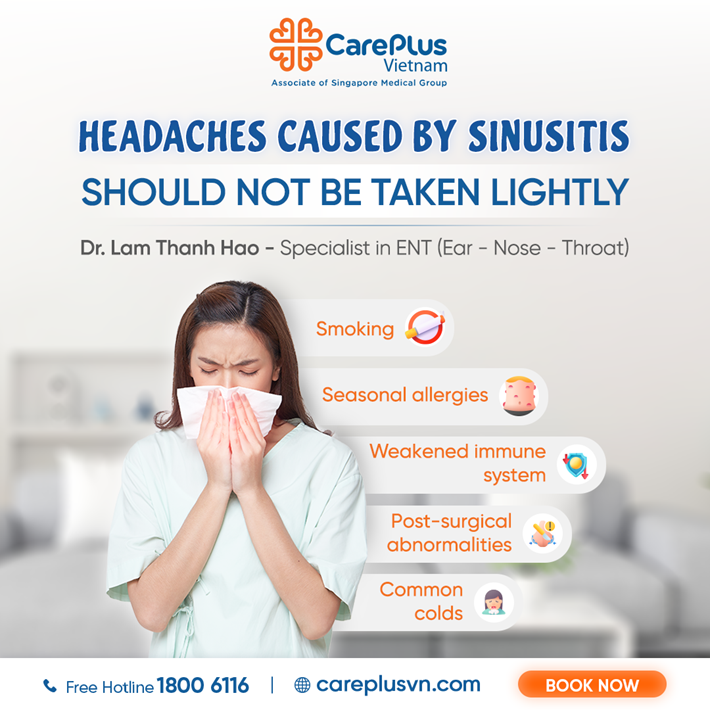
5. Risk Factors for Sinusitis and Sinus Headaches
According to the U.S. Centers for Disease Control and Prevention (CDC), factors that increase the risk of sinusitis include:
- Common colds
- Seasonal allergies
- Smoking or exposure to secondhand smoke
- Anatomical abnormalities like nasal polyps or deviated septum
- Immunodeficiency or use of immunosuppressive medications, increasing susceptibility to infections
6. Sinusitis Treatment
Depending on the underlying cause and clinical assessment, doctors may prescribe appropriate medications along with procedures such as nasal irrigation or nebulization.
In cases that do not respond to medical therapy, surgical intervention may be necessary.
7. Patient Advice
- Keep the nasal area warm in cold weather
- Avoid smoke, dust, irritants, and polluted environments
- If you suspect sinusitis—especially if symptoms persist or recur frequently throughout the year—consult an ENT specialist promptly for proper diagnosis and treatment.