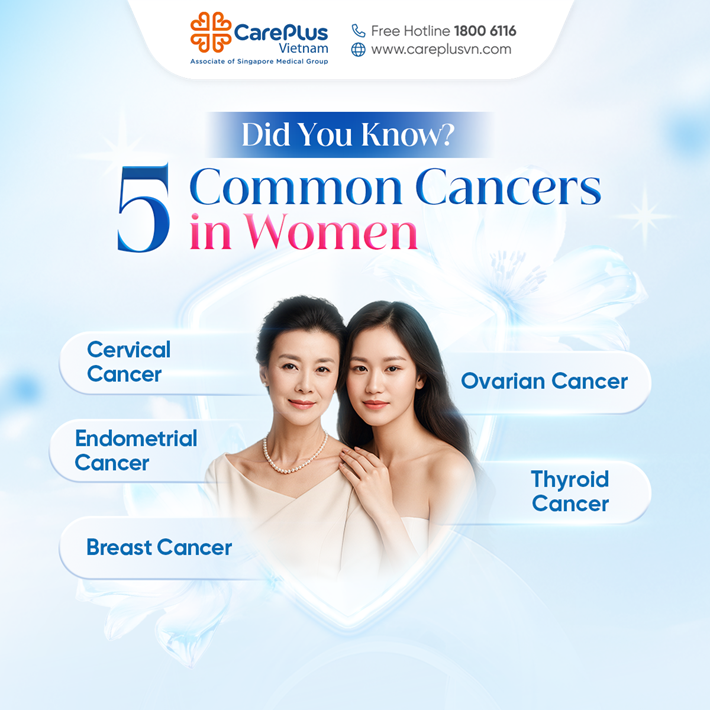
Did You Know? Five Common Cancers in Women
1/30/2026 2:49:54 PM
In Vietnam, there are approximately 200,000 new cancer cases and more than 120,000 cancer-related deaths each year. Among these, five types of cancer that are common in women have shown a worrying trend of increasing incidence and younger age of onset. Gaining essential knowledge about the following cancers can help women proactively prevent and detect the disease at an early stage.
Cancer is becoming increasingly prevalent, with a rising trend toward younger patients. Therefore, anyone can develop cancer. However, many cancers have a higher incidence in women than in men, and vice versa.
OVERALL CANCER SITUATION IN VIETNAM
Vietnam is currently among the countries with a high cancer incidence rate in Asia. Notably, the number of new cancer cases and cancer-related deaths among young women has increased rapidly in recent years.
Below are the five most common cancers in women that can be prevented and effectively controlled if detected early:
1. Cervical Cancer
Cervical cancer is one of the top three leading causes of cancer-related death in women. Most cases are caused by persistent infection with the human papillomavirus (HPV), particularly HPV types 16 and 18. The virus is transmitted through sexual contact and often presents no obvious symptoms, causing many women to be unaware that they are infected.
In the early stages, the disease progresses silently. When symptoms appear, it is often at an advanced stage, making treatment more difficult.
2. Endometrial Cancer
The risk of endometrial cancer increases in middle-aged women with excess estrogen levels, early onset of menstruation, late menopause, obesity, or a family history of colorectal, ovarian, or breast cancer.
In addition, women with a personal or family history of colorectal cancer, polycystic ovary syndrome, ovarian cancer, or breast cancer are at a higher risk of developing endometrial cancer compared to the general population.
3. Breast Cancer
Breast cancer is the most common cancer among women. The risk increases with age, especially after the age of 40. Risk factors include genetic predisposition, early menstruation, late menopause, late childbirth, obesity, and physical inactivity.
If detected early, the cure rate can be relatively high. Therefore, women over the age of 40 should undergo regular breast examinations as recommended by their doctors to avoid missing early signs of the disease.
4. Ovarian Cancer
Ovarian cancer commonly occurs in older women, those who are infertile, or those who have children later in life. Additionally, women with a personal or family history of ovarian cancer or breast cancer are considered high-risk.
To prevent ovarian cancer, women over 40 years old should have regular gynecological check-ups to detect early abnormalities in the ovaries.
5. Thyroid Cancer
The incidence of thyroid cancer in women is significantly higher than in men. This is largely due to hormonal changes during puberty, pregnancy, and menopause, as well as genetic factors, gender differences, pre-existing thyroid disorders, or exposure to radiation.
Thyroid cancer generally has a favorable prognosis, with a high cure rate if detected early.
HOW CAN THESE FIVE CANCERS IN WOMEN BE DETECTED EARLY?
Early detection is the key factor determining treatment effectiveness. Many cancers can be cured or well controlled if detected at an early stage, when tumors are still small and have not spread. This not only increases survival rates but also reduces treatment costs and risks.
Pay Attention to Your Body
Some abnormal signs may serve as early warning signals, such as:
-
The appearance of a lump or hard mass in the breast, neck, or lower abdomen
-
Menstrual irregularities or abnormal vaginal bleeding after menopause
-
Hoarseness, difficulty swallowing, or unexplained rapid weight loss
If any of these symptoms occur, individuals should seek medical examination and professional consultation as early as possible.
REGULAR CANCER SCREENING AND COMPREHENSIVE HEALTH CHECK-UPS
Even when feeling completely healthy, regular health check-ups and cancer screening remain extremely important. Common screening methods include:
-
Pap smear or HPV testing: early detection of cervical cancer
-
Mammography or breast ultrasound: early detection of breast cancer
-
Gynecological ultrasound, thyroid tests, and hormonal assessments: support early detection of ovarian, endometrial, and thyroid cancers
Depending on age and individual risk factors, doctors will recommend an appropriate screening schedule for each person.
💡 Expert Advice
Consider cancer screening a routine healthcare habit—just like checking blood pressure or blood sugar levels. Early detection makes treatment easier, more affordable, and helps ensure a long-term healthy life.
Source: World Health Organization (WHO), Global Cancer Observatory (GLOBOCAN 2022).