PATIENT STORY: IRON-DEFICIENCY ANEMIA IN A SCHOOL-AGED ADOLESCENT – STABILIZED AFTER 3 MONTHS OF TREATMENT
12/16/2025 2:40:58 PM
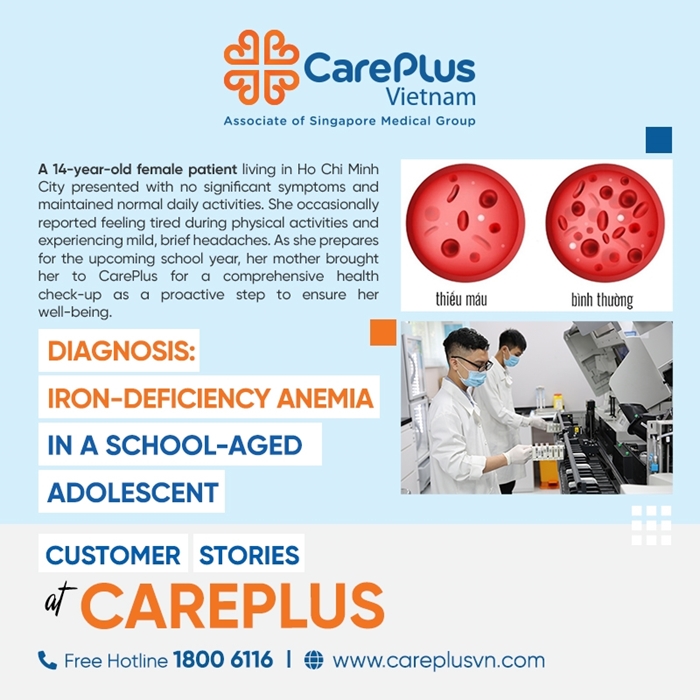
📍 Patient N (14 years old, Grade 8 student, living in Ho Chi Minh City) had no remarkable symptoms, only occasional fatigue during sports activities and brief headaches. As the new school year was approaching, her mother took her for a routine health check-up, during which iron-deficiency anemia was detected and treated promptly before the start of the school year.
1️⃣ CLINICAL ASSESSMENT
👩🏻⚕️ During examination, MSc., MD. Su Thi Nhu Ngoc – Pediatric Specialist noted that the patient’s skin and mucous membranes appeared slightly pale rather than rosy as expected. She had no fever, no signs of acute infection or gastrointestinal disorders, and her height and weight were within the average range for her age.
▶️ A more detailed review of dietary habits and lifestyle revealed:
▪️ Breakfast was often inadequate, sometimes limited to milk or sweet pastries.
▪️ Main meals were low in red meat, fish, and dark green vegetables—important dietary sources of iron.
▪️ Menarche had occurred more than 2 years prior; although there was no menorrhagia, menstrual flow was relatively heavy each cycle. Food intake also tended to decrease during menstruation due to mild abdominal pain.
▪️ No family history of anemia was reported.
🔔 The combination of an iron-poor diet and regular physiological blood loss led the physician to suspect iron-deficiency anemia—a condition not uncommon in school-aged children but often overlooked because daily activities may remain relatively normal.
▶️ To identify the cause of anemia, the following blood tests were ordered:
▪️ Complete Blood Count (CBC) to assess red blood cell count and indices.
▪️ Serum ferritin to evaluate iron stores in the body.
🔔 Test results showed:
▪️ Hemoglobin (Hb) levels below the normal range for age.
▪️ Microcytic, hypochromic red blood cells, consistent with iron-deficiency anemia.
▪️ Markedly reduced serum ferritin, indicating very low iron stores.
2️⃣ DIAGNOSIS
▶️ Confirmed diagnosis: Iron-deficiency anemia
▶️ Possible causes:
▪️ Inadequate diet, particularly insufficient intake of easily absorbable iron-rich foods such as red meat, liver, fish, and eggs.
▪️ Periodic iron loss through menstruation, especially during heavier cycles.
▪️ Increased iron requirements during the growth and pubertal period.
3️⃣ TREATMENT PLAN
After identifying the underlying causes, treatment was implemented in two parallel approaches:
▶️ Therapeutic iron supplementation:
▪️ Oral iron prescribed at a dose appropriate for body weight and severity of anemia.
▪️ Taken on an empty stomach (1 hour before or 2 hours after meals) to optimize absorption.
▪️ Continued for at least 3 months after hemoglobin normalization to replenish iron stores.
▶️ Dietary modification:
▪️ Increased intake of iron-rich, highly bioavailable foods: beef, lean pork, chicken liver, fish, and eggs.
▪️ Combined with vitamin C–rich foods (oranges, mandarins, grapefruit, guava, tomatoes) at each meal to enhance iron absorption.
▪️ Limited consumption of sweets, snacks, milk tea, and carbonated soft drinks, which offer little nutritional value and may inhibit micronutrient absorption.
▪️ For adolescents with heavier menstrual cycles, iron-rich foods should be emphasized during menstruation.
4️⃣ TREATMENT OUTCOME
After 3 months of good adherence to treatment and dietary improvements, Patient N returned to CarePlus for follow-up with encouraging results:
▪️ Hemoglobin (Hb) levels had returned to the normal range for her age.
▪️ Ferritin levels increased significantly, indicating restored iron stores.
▪️ Fatigue during physical activity resolved, and headaches no longer occurred.
▪️ Breakfast habits improved, with the patient proactively choosing foods rich in iron and vitamin C.
The physician concluded that the patient responded well to treatment, her health was stable, and she had sufficient physical reserves for upcoming academic and physical activities. She was advised to maintain a balanced diet and attend regular follow-ups to monitor long-term iron stores, especially during puberty.
⚠️ IMPORTANT NOTES
❗️ If not detected and treated early, iron-deficiency anemia can negatively affect concentration, memory, and overall health.
❗️ After treatment, children should undergo follow-up examinations and CBC testing every 3–6 months to ensure adequate restoration of iron stores.
📢 PREVENTING IRON-DEFICIENCY ANEMIA IN SCHOOL-AGED CHILDREN
▶️ Iron-deficiency anemia is not limited to young children; it is also very common during adolescence, particularly among girls. The condition often progresses silently and may be missed without regular health check-ups.
🔔 To help prevent iron-deficiency anemia, parents are advised to:
▪️ Ensure meals include all four major food groups, with particular emphasis on iron- and vitamin C–rich foods.
▪️ Encourage children to eat regular, complete meals.
▪️ Monitor menstrual cycles in adolescent girls, especially if bleeding is heavy or prolonged.
▪️ Provide periodic deworming as recommended.
▪️ Schedule annual health check-ups to allow early detection of anemia, micronutrient deficiencies, or other health concerns.
🔸 A routine health check-up, though seemingly simple, can be a valuable opportunity to detect important deficiencies early—helping children enter the new school year with optimal physical and mental well-being.