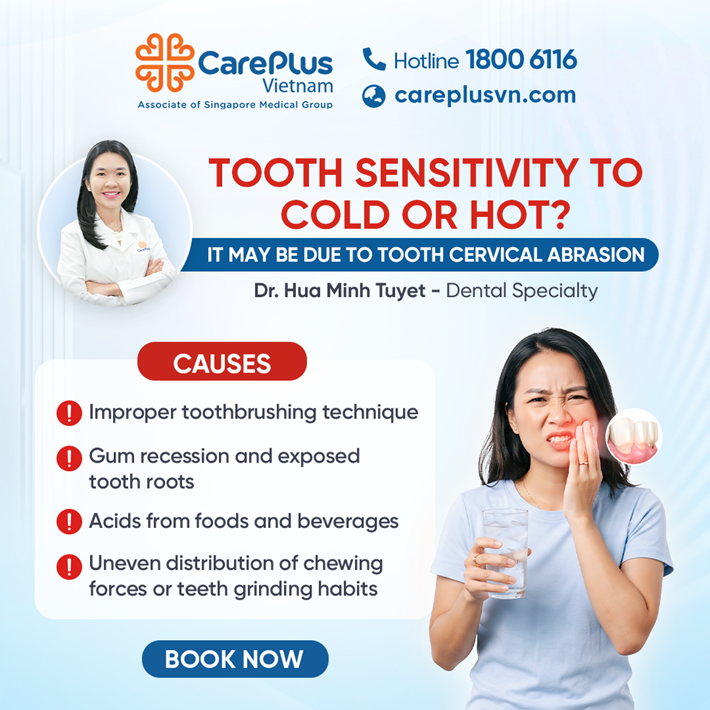
TOOTH SENSITIVITY TO COLD OR HOT? IT MAY BE DUE TO TOOTH CERVICAL ABRASION
Sensitivity when eating cold foods or drinking hot beverages may be a sign of cervical tooth wear. Learn the causes and appropriate treatment options with CarePlus doctors in the article below.
8/25/2026 4:15:33 PM
🧊 Have you ever felt a sharp twinge when drinking cold water, eating sour or sweet foods, or noticed a small notch right at the base of your tooth, near the gumline? This could be a sign of cervical tooth wear - a fairly common condition that many people tend to overlook.
From a Dentist's perspective, what matters is not simply "filling in the worn area," but identifying why the tooth is wearing down in order to prevent the condition from progressing further. To better understand the causes of cervical tooth wear and the appropriate treatment methods, join Dr. Hua Minh Tuyet - Dentistry Specialist at CarePlus - in exploring this topic in the article below.
1️⃣ What is cervical tooth wear? How can you recognize it?
Cervical tooth wear is a condition in which tooth structure gradually wears away in the area near the gumline, often forming a groove or notch at the neck of the tooth.
You may recognize it through several signs:
▪️Sensitivity when drinking cold water, eating hot/cold foods, or sour/sweet foods.
▪️A sharp or stinging sensation when brushing your teeth or touching the neck of the tooth.
▪️Noticing a visible notch, a V-shaped indentation, or an area of missing tooth structure near the gumline.
▪️In some cases, this may be accompanied by gum recession, making the tooth appear longer.
▪️As the damage progresses deeper, the tooth may become more sensitive or weaker.
However, not every notch at the neck of the tooth is necessarily cervical tooth wear. You should see a dentist for an examination and an accurate diagnosis, as this condition needs to be distinguished from cervical decay, acid erosion, abrasion from brushing, or other forms of non-carious cervical lesions, in order to choose the appropriate treatment and corrective approach.
2️⃣ Why does cervical tooth wear occur?
Cervical tooth wear does not stem from a single cause but is often the result of a combination of factors:
🔹 Improper brushing technique
Brushing too hard, using a hard-bristled toothbrush, or brushing with a horizontal motion over a prolonged period can wear away tooth structure at the neck of the tooth.
🔹 Distribution of chewing forces or teeth-grinding habits
Excessive concentration of chewing force, or repeated force applied to one area of the tooth, can create stress at the cervical region.
🔹 Acid from food and beverages
Frequent, excessive consumption of carbonated soft drinks, acidic fruit juices, and similar items can soften the surface of the enamel and dentin, making the enamel more prone to structural loss.
🔹 Gum recession and exposed tooth roots
When the tooth root becomes exposed, the dentin - which lacks the protective enamel layer - becomes more prone to wear and more likely to cause sensitivity.
👉 Therefore, if the worn area is simply filled without addressing the underlying cause, the damage may continue to appear or recur.
3️⃣ How is cervical tooth wear treated?
Not every case requires a filling. The dentist will assess the depth of the damage, the symptoms, the underlying cause, gum condition, and bite alignment before proceeding with treatment.
🔷 If the damage is mild
Immediate restoration may not be necessary; priority is instead given to:
▪️Changing your brushing technique.
▪️Using a soft-bristled toothbrush.
▪️Controlling acid-related factors.
▪️Regular follow-up monitoring.
🔶 If the damage is deep or causing sensitivity
▪️The dentist may recommend a restorative filling at the cervical area using a suitable material such as composite resin or glass ionomer cement, depending on the individual case.
▪️In cases where the damage is very deep and has affected the dental pulp, and examination reveals irreversible pulpitis, the dentist may need to perform root canal treatment (pulp treatment) before restoring the lost tooth structure.
The goal is not only to improve aesthetics but also to protect the remaining tooth structure; reduce sensitivity; limit plaque accumulation; and restore the natural shape of the tooth.
🔴 If the cause is related to teeth grinding or bite alignment
An examination is needed to assess bite alignment and grinding habits. Where appropriate, the dentist may recommend a protective night guard to reduce the impact of force on the teeth and periodontal structures.
➡️ The most important factor in treating cervical tooth wear is identifying the correct underlying cause.
At CarePlus, cervical fillings are performed gently, with:
✔️ A team of experienced and dedicated Dentistry specialists
✔️ A modern equipment system and aesthetic filling materials that help restore the natural shape of the tooth
✔️ A professional process that gives clients peace of mind throughout examination and treatment
If you are experiencing sensitivity, notice a notch forming at the neck of a tooth, gum recession, or a feeling that your teeth are becoming increasingly sensitive, don't wait until the damage becomes severe before seeking care. Let a dentist examine your teeth and bite alignment to determine the cause, assess the extent of the damage, and select the treatment method best suited to your individual case.
📩 Message our Fanpage or contact our toll-free hotline at 1800 6116 to book an appointment now.
CAREPLUS INTERNATIONAL CLINICS
Associate of Singapore Medical Group
Hotline: 1800 6116
Email: info@careplusvn.com
Fanpage: CarePlus Clinic Vietnam