Recognizing Roseola in Children
Most parents and kids have likely dealt with roseola at least once! To better understand this common condition, let’s dive into what roseola is and how to recognize it.
11/19/2024 2:50:07 PM
What is Roseola?
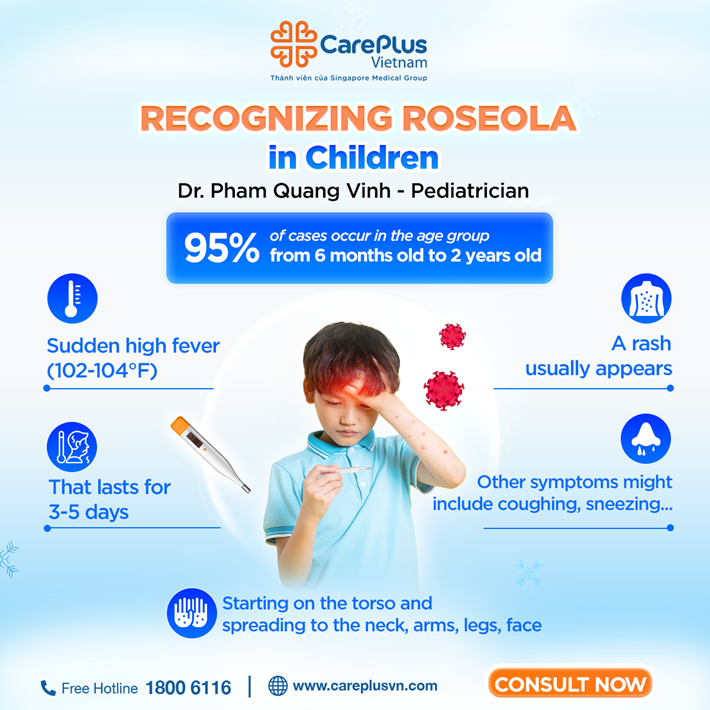
Roseola is a common, generally mild viral illness that affects young children, mainly during spring and fall. It spreads through respiratory droplets and saliva, often caused by Human Herpes Virus 6 or 7. Most cases occur in children between 6 months and 2 years (around 95%) and is a frequent cause of fever in infants (10-45% of cases).
Recognizing Symptoms of Roseola in Children
The illness begins with a sudden high fever (39-40°C or 102-104°F) that lasts for 3-5 days. After the fever subsides, a rash usually appears. This rash often consists of small pink spots or patches that fade when pressed, usually starting on the torso (chest, back, abdomen) and spreading to the neck, arms, legs, and sometimes the face. The rash is typically not itchy or uncomfortable and usually fades within a few days. Other symptoms might include coughing, sneezing, ear pain, fatigue, and reduced appetite.
When to Seek Medical Help
Take your child to the doctor if you notice:
-
Your child is unusually drowsy, difficult to wake, or refuses food and drink.
-
Persistent high fever for over 2 days.
-
Seizures during fever.
-
Symptoms differ from typical roseola (it may need to be distinguished from measles, rubella, scarlet fever, etc.).
At-Home Care for a Child with Roseola
To ease your child’s discomfort and help with recovery:
-
Use paracetamol or ibuprofen to manage fever and pain, following the appropriate dosage and intervals.
-
Encourage your child to drink plenty of water to stay hydrated.
-
Avoid antibiotics, as they don’t affect viruses.
-
Dress your child in light, comfortable clothing and provide meals that suit their appetite.
Preventing Roseola
Roseola spreads through respiratory droplets, often during the incubation period before fever and rash appear. There is no specific treatment or vaccine. To help prevent it, encourage regular handwashing.
Children can safely return to school once they’re fever-free and feeling better. Also, consider having them wear a mask if they show symptoms or when in crowded areas.
We hope this article provides helpful and accurate information for parents!