CERVICAL CANCER SCREENING – A KEY TO PROTECTING MODERN WOMEN’S HEALTH
3/6/2026 10:59:18 AM
We often seek medical care only when our bodies begin to “signal” that something is wrong. However, when it comes to cervical cancer, the concern is that in its early stages the disease usually has no obvious symptoms. There may be no pain, no fatigue, and no noticeable abnormalities — yet precancerous changes can silently develop.
Cervical cancer is one of the most common cancers among women, particularly in developing countries. According to the World Health Organization (WHO), hundreds of thousands of women are diagnosed with cervical cancer each year, and a large proportion of cases are detected at an advanced stage.
The encouraging news is that cervical cancer is largely preventable and can be detected early through regular screening and complete HPV vaccination.
1. What is Cervical Cancer?
Cervical cancer occurs when cells in the cervix — the lower part of the uterus connecting to the vagina — begin to grow abnormally and uncontrollably.
The leading cause is infection with the Human Papillomavirus (HPV), particularly high-risk types such as HPV 16 and HPV 18, which account for more than 70% of cervical cancer cases.
HPV is mainly transmitted through sexual contact. Most women infected with HPV will clear the virus naturally within 1–2 years. However, in some cases, the virus persists and may cause precancerous lesions, which can progress to cervical cancer if not detected and treated in time.
2. Signs and Symptoms of Cervical Cancer
In the early stages, cervical cancer typically does not present clear symptoms, which is why many women may overlook the optimal time for early detection and treatment.
As the disease progresses, some symptoms may appear, including:
-
Abnormal vaginal bleeding (after intercourse, between menstrual periods, or after menopause)
-
Increased vaginal discharge, possibly foul-smelling or mixed with blood
-
Pelvic pain or pain during sexual intercourse
-
Persistent menstrual irregularities
-
In advanced stages: unexplained weight loss, fatigue, or anemia
However, these symptoms are not specific and can easily be mistaken for common gynecological infections. Therefore, regular screening remains the most effective method for early detection.
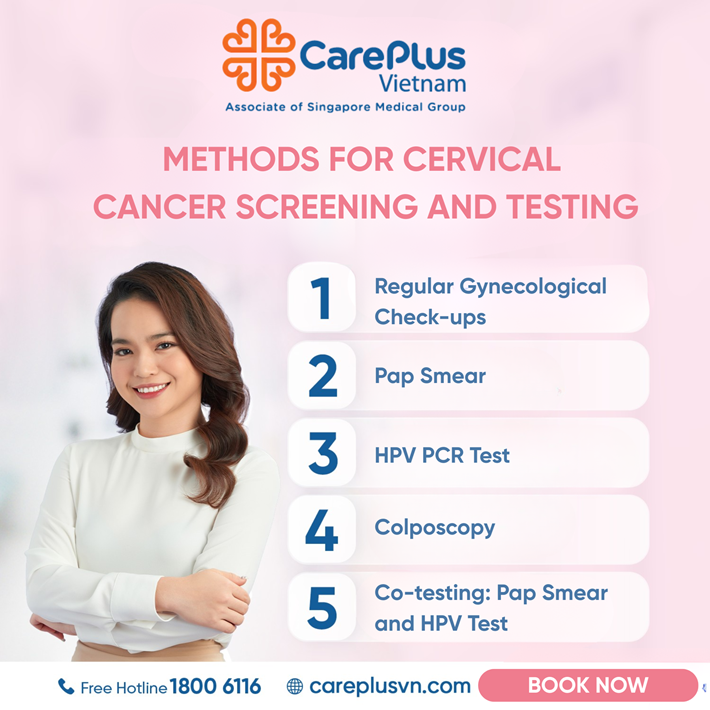
3. Cervical Cancer Screening Methods
Modern medicine offers several screening methods to detect precancerous lesions and early-stage cervical cancer:
Routine gynecological examination
Helps assess the health of the cervix and vagina and detect any abnormalities.
Pap smear (cervical cytology test)
Detects abnormal cellular changes in the cervix before they develop into cancer.
HPV PCR test
Identifies the presence of high-risk HPV types — the main cause of cervical cancer.
Colposcopy
Performed when screening results are abnormal, allowing detailed examination of the cervix and guiding biopsy if necessary.
Combining Pap smear and HPV testing significantly increases screening sensitivity, especially in women aged 30 years and older.
4. Who Should Undergo Cervical Cancer Screening?
Cervical cancer screening is recommended for most women, even if they have no symptoms.
You should undergo regular screening if you fall into any of the following groups:
-
Women aged 21 years and older who have been sexually active should begin routine Pap smear screening every 1–3 years, according to medical guidelines.
-
Women aged 30–65 years are recommended to undergo co-testing with Pap smear and HPV DNA testing every 3–5 years, which improves early detection of precancerous lesions.
-
Women with high-risk factors — such as early sexual activity, multiple sexual partners, previous HPV infection, abnormal Pap smear results, or weakened immune systems — may require more frequent screening as advised by a healthcare professional.
Important note:
Even women who have received the HPV vaccine should continue routine screening, as the vaccine does not provide 100% protection against all cancer-causing HPV types.
5. The Role of HPV Vaccination in Preventing Cervical Cancer
New-generation HPV vaccines provide protection against multiple high-risk HPV types associated with cervical cancer, as well as cancers of the vagina, vulva, and other HPV-related diseases.
HPV vaccination is recommended for:
-
Girls, boys, and women aged 9–45 years
-
Individuals before or after becoming sexually active
-
Even those who have already been infected with HPV, as the vaccine can still protect against other HPV types
Vaccination with Gardasil, combined with regular screening, significantly helps reduce the risk of cervical cancer.
👉 Do not wait until symptoms appear before seeking medical care. Consider cervical cancer screening as an essential part of self-care. A single screening appointment may help you: "Detect risks early – Take proactive steps to protect your health – Gain greater peace of mind for the future"
📩 Inbox our fanpage or contact our free hotline 1800 6116 to schedule your appointment today.