HOW DOES HPV AFFECT MEN'S HEALTH?
6/10/2026 4:06:11 PM
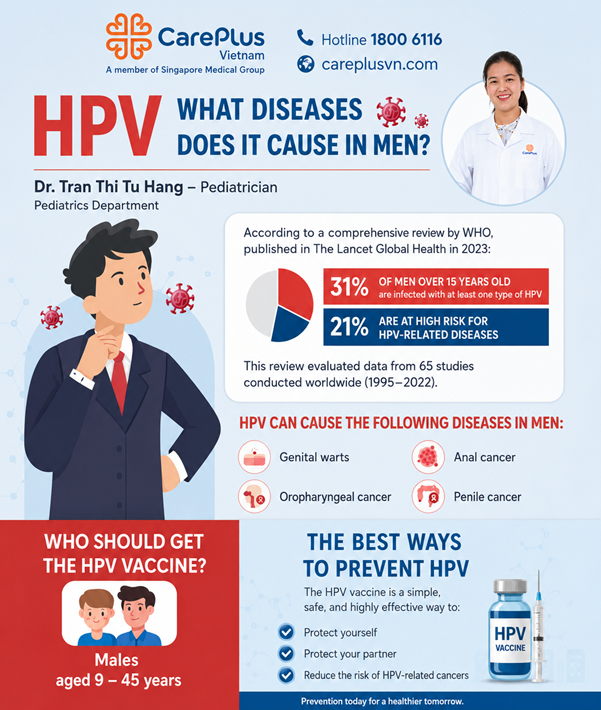
When people hear about the Human Papillomavirus (HPV), they often associate it only with cervical cancer in women. However, HPV is a sexually transmitted virus that can cause many serious diseases in both men and women.
📊 According to global statistics, HPV is responsible for approximately 5% of all cancer cases worldwide in both sexes.
❗️The burden of HPV-related diseases in men has been increasing, from 9.8% in 1989 to 26% in 2014, and it is estimated that the incidence in 2023 is 1.3 times higher than in 2014.
⚠️ In men, HPV is associated with genital warts and several potentially life-threatening cancers if not detected and prevented early.
👉 In the article below, Dr. Tran Thi Tu Hang, Specialist Level I in Pediatrics, CarePlus International Clinics, shares important information about the impact of HPV on men's health, helping you take a proactive approach to protecting yourself and your family.
⚠️ WHY SHOULD MEN GET THE HPV VACCINE?
1️⃣ HPV can cause cancer in men
▶️ HPV infection can lead to several types of cancer, including:
-
Penile cancer
-
Anal cancer
-
Oropharyngeal cancer (mouth and throat)
▶️ HPV is responsible for approximately 70% of oropharyngeal cancers and 80% of anal and penile cancers.
▶️ Alarmingly, HPV-related cancers in men continue to rise, even though the incidence in women has declined in many countries thanks to widespread HPV vaccination programs (such as Australia, the United States, Sweden, and Denmark).
2️⃣ HPV causes genital warts
▶️ HPV infection is responsible for virtually 100% of genital wart cases in men.
▶️ Men infected with HPV are at high risk of developing genital warts. Although not life-threatening, this condition can be uncomfortable, recurrent, and have a significant impact on mental well-being, sexual health, and overall quality of life.
3️⃣ Men are more likely to acquire HPV, clear the virus less effectively, and become reinfected
▶️ About 91% of sexually active men are at risk of acquiring genital HPV during their lifetime.
▶️ Men can contract HPV through unprotected sexual activity.
▶️ The prevalence of HPV infection—including low-risk types such as HPV 6 and 11 and high-risk types such as HPV 16 and 18—is higher in men than in women across all age groups.
‼️ Unlike women, men have a lower rate of natural viral clearance and a weaker immune response following natural HPV infection. As a result, they are more susceptible to persistent infection, recurrence, and reinfection.
‼️ In addition, there are currently no established screening methods for the early detection of HPV-related cancers in men. Consequently, these cancers are often diagnosed at a later stage, making treatment more difficult and less effective.
5️⃣ Vaccinating women alone is not enough to indirectly protect men because:
▶️ HPV vaccination coverage among women is still not high enough.
▶️ Not all men have sexual relationships with women, meaning some groups receive no benefit from herd immunity.
🔔 BENEFITS OF HPV VACCINATION FOR MEN
🔸 Proven effectiveness
Clinical studies have shown that HPV vaccines generate a strong antibody response and help prevent anal precancerous lesions and genital warts in men.
🔸 Men play a key role in HPV prevention
Men can transmit HPV to their partners even when they have no symptoms. Vaccination helps reduce transmission and protects both themselves and their partners.
🔸 HPV vaccination is a shared community responsibility
When both men and women are vaccinated, the overall rate of HPV infection in the community decreases significantly. This helps reduce HPV-related cancers in both sexes, lowers the number of genital wart cases, and strengthens herd immunity.
📢 Therefore, HPV vaccination for men is both important and necessary.
"HPV vaccination is the simplest, safest, and most effective way to: Protect Yourself – Protect Your Partner – Prevent Cancer."