UNDERSTANDING COMMON SKIN DISEASES DURING THE RAINY SEASON!
7/20/2026 9:27:07 AM
The medical content of this article is reviewed by Dr. Nguyen Doan Quynh (M.Sc.) – Head of the Dermatology Department, CarePlus International Clinics.
⁉️ Did you know that just a single rain shower can pose more threats to your skin than you might think?
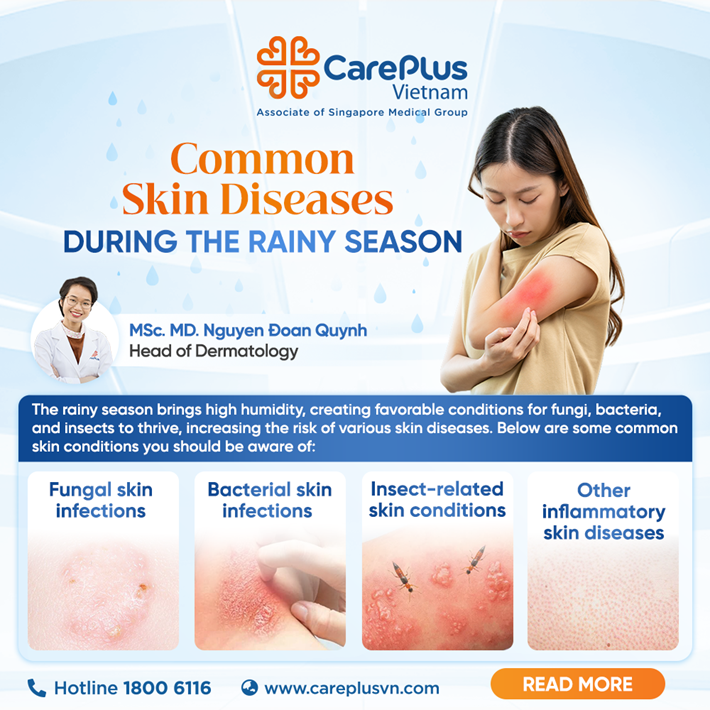
💧 The rainy season, characterized by high humidity, prolonged rainfall, and frequent skin contact with contaminated water, dirt, and bacteria, creates the ideal environment for fungi and bacteria to thrive. This not only elevates the risk of skin irritation and infection but also triggers the onset or recurrence of various dermatological conditions if the skin is not properly cared for.
▶️ So, what are the most common skin diseases during the rainy season, and how can you effectively prevent them? Let's find out with our dermatologist below.
1️⃣. Fungal Skin Infections
▪️ Fungal skin infections are among the most common dermatological issues during the rainy season. Typical presentations include erythematous (red), scaly plaques that form a ring-like shape (annular lesions) or have slightly raised borders, occasionally accompanied by papulovesicles (blister-like bumps), and are usually intensely pruritic (itchy).
▪️ The damp environment of the rainy season facilitates the proliferation of various fungal strains on the skin. Tinea pedis (athlete's foot) and tinea unguium (nail fungus) often exacerbate due to prolonged exposure to contaminated water or wearing damp footwear.
Tinea versicolor and intertrigo are also fungal conditions prone to flaring up during periods of rising temperatures combined with sustained high humidity. Symptoms of intertrigo typically manifest as erythematous plaques in intertriginous areas (skin folds) such as the axillae (underarms), inframammary folds (under the breasts), and inguinal creases (groin). The condition tends to be more severe in individuals with obesity, diabetes, or a sedentary lifestyle.
▪️ Small localized lesions usually require only topical antifungal treatment and keeping the affected skin area dry and clean. However, if the lesions cover a large area or fail to improve with topical medication, you should consult a dermatologist for a proper diagnosis and treatment plan.
2️⃣. Bacterial Skin Infections
▪️ Increased air humidity also fosters the outbreak of bacterial skin infections. Common bacterial conditions during the rainy season include folliculitis, impetigo, and cellulitis.
Impetigo is commonly caused by Staphylococcus or Streptococcus bacteria. It affects children more frequently than adults and often leads to outbreaks in kindergartens. The disease presents as blisters on an erythematous base; after a few days, these blisters collapse in the center, forming flower-like, crusted lesions that are highly contagious. This condition requires professional diagnosis and treatment by a dermatologist. Infected children should be isolated until the skin heals to prevent spreading the infection to others.
Cellulitis is a deep, diffuse bacterial infection of the skin and subcutaneous tissues. Its presentation is usually acute and severe, characterized by a painful, swollen, and red plaque at the affected site, which may or may not produce pus, causing intense pain and potentially affecting the patient's systemic health. Patients need to seek immediate medical evaluation and treatment to prevent the infection from progressing.
3️⃣. Insect-Bite Dermatitis
▪️ The rainy season is also the peak breeding time for mosquitoes, bedbugs, rove beetles, and various other insects.
▪️ Following an insect bite or contact with their secretions, the skin may develop erythematous patches, vesicles (blisters), and a burning sensation. In some cases, the initial lesions can be extensive and may lead to complications such as secondary infections or severe scarring if managed improperly.
▪️ Lesions caused by rove beetles (Paederus dermatitis) are frequently misdiagnosed as shingles (herpes zoster) or herpes simplex virus infections. Therefore, patients should consult a physician for an accurate diagnosis and appropriate treatment.
4️⃣. Other Inflammatory Skin Diseases
Irritant or allergic contact dermatitis is also prevalent during the rainy season due to the increased risk of exposure to contaminants, chemicals, and waste present in floodwaters. Weather transitions also stimulate the abnormal proliferation of molds and house dust mites, which can act as triggers for exacerbating pre-existing inflammatory skin conditions, such as acute flares of atopic dermatitis, psoriasis, etc. If the lesions worsen and do not respond to routine skincare measures, patients should consult a doctor for timely adjustments to their treatment plan.
🔔 How to Prevent Skin Diseases During the Rainy Season?
👩🏻⚕️ To minimize the risk of contracting skin diseases during the rainy season, our dermatologists recommend that you:
✔ Keep your body clean and dry, and wear sweat-wicking clothing. ✔ Avoid wearing excessively thick clothing or non-breathable materials like nylon and heavy wool, as they can easily irritate the skin. ✔ After being caught in the rain, wash your feet thoroughly with a mild soap, dry your body completely, and change your clothes immediately. ✔ Minimize wading through water. If contact with floodwater is unavoidable, wear waterproof boots or shoes to reduce the risk of fungal infections. ✔ Drink plenty of water and consume fruits to boost your immune system and maintain skin hydration from within.
📍 Most importantly, upon detecting abnormal signs such as persistent itching, blistering, rashes, flaking, or spreading lesions, please visit a medical facility for examination. Refrain from self-medicating or applying unverified remedies, as this can severely worsen the condition.
☎️ If you are experiencing any skin concerns, please contact our hotline at 1800 6116 or message the CarePlus Fanpage for consultation and to schedule an early appointment.
Currently, the Dermatology Department at CarePlus gathers a team of highly experienced doctors specializing in the diagnosis and treatment of diseases related to the skin, hair, nails, and sweat glands. We also provide consultations, screenings, and treatments for sexually transmitted infections (STIs), delivering comprehensive skincare solutions for all ages.