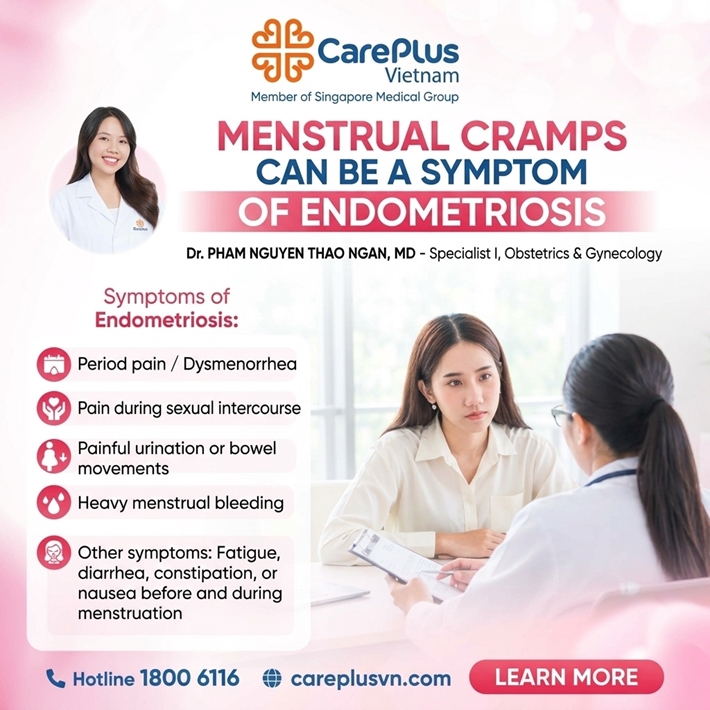
MENSTRUAL CRAMPS CAN BE A SYMPTOM OF ENDOMETRIOSIS
9/16/2026 3:54:50 PM
Do you still believe persistent period pain is just a natural reaction of your body? It could very well be a symptom of endometriosis—a common yet frequently overlooked gynecological condition.
Simply put, endometriosis occurs when tissue similar to the lining of the uterus grows outside the uterine cavity. This tissue behaves just like normal endometrial tissue: thickening, breaking down, and bleeding with each menstrual cycle. However, because this misplaced tissue has no way to exit the body like normal period blood, surrounding tissues can become irritated, leading to scar tissue formation and pelvic adhesions.
Endometriosis can cause pain—especially during menstruation—and may also affect fertility.
Let's join Dr. Pham Nguyen Thao Ngan, MD, Specialist I – Obstetrics & Gynecology, to learn more about endometriosis and protect your reproductive health starting today.
What Are the Symptoms of Endometriosis? The main symptom of endometriosis is pelvic pain, often associated with menstrual periods. Although period pain is common, the pain experienced by women with endometriosis is usually far more severe than normal and worsens over time.
1. Common symptoms include:
-
Menstrual cramps: Pelvic pain and cramping may begin days before a period and last throughout it. You may also experience lower back and abdominal pain.
-
Pain during sex: Pain during or after sexual intercourse is very common with endometriosis.
-
Painful urination or bowel movements: Most commonly experienced before or during your period.
-
Heavy menstrual bleeding: You may experience heavy periods or bleeding between periods (intermenstrual bleeding).
-
Infertility: In some cases, the condition is only diagnosed during fertility evaluations.
-
Other symptoms: Fatigue, diarrhea, constipation, bloating, or nausea, particularly before and during menstruation.
Note: Pain intensity does not necessarily reflect the extent or stage of the condition. Some women with endometriosis experience no symptoms at all and only discover it during infertility consultations or surgery for other conditions.
2. Who Is at High Risk for Endometriosis? Risk factors for developing endometriosis include:
-
Never giving birth
-
Starting your period at an early age
-
Going through menopause at an older age
-
Short menstrual cycles
-
Heavy menstrual periods lasting longer than 7 days
-
Low Body Mass Index (BMI)
-
One or more relatives (mother, aunt, sister) with endometriosis
Symptoms typically start a few years after onset of menstruation, may temporarily improve during pregnancy, and often decrease after menopause (unless you are taking estrogen therapy).
3. Complications of Endometriosis
The primary complication of endometriosis is difficulty conceiving. Up to half of women with endometriosis experience trouble getting pregnant. For pregnancy to occur, an egg must be released from the ovary, travel through the fallopian tube, and be fertilized by sperm before implanting in the uterine wall. Endometriosis can block the fallopian tubes, preventing the egg and sperm from meeting, or indirectly impact fertility by damaging the ovaries.
Doctor's Advice: Many women with mild-to-moderate endometriosis can still conceive naturally. However, because the condition tends to progress over time, you should not delay plans for pregnancy and should proactively schedule regular check-ups for timely support.
If you are experiencing persistent period pain, pain during sex, heavy bleeding, or spotting between periods, take a proactive step by scheduling a gynecological examination.
Explore Comprehensive Gynecological Exam Packages at CarePlus:
-
Comprehensive Gynecological Exam Package for Single Women: https://www.careplusvn.com/vi/kham-phu-khoa-toan-dien-cho-nu-doc-than-3
-
Comprehensive Gynecological Exam Package for Married Women: https://www.careplusvn.com/vi/kham-phu-khoa-toan-dien-cho-nu-co-gia-dinh-3
-
Gynecological Exam Package for Married Women (Co-test HPV Genotyping + PathTezt): https://www.careplusvn.com/vi/goi-kham-phu-khoa-cho-nu-co-gia-dinh-co-test-hpv-genotyping-pathtezt
📩 Message our fanpage or call our toll-free hotline at 1800 6116 to book your appointment today.