IRRITABLE BOWEL SYNDROME (IBS)
5/22/2026 4:35:10 PM
💢 Persistent abdominal pain, bloating, diarrhea, or constipation — but medical tests show “nothing wrong”?
It could be Irritable Bowel Syndrome (IBS), one of the most common digestive disorders today.
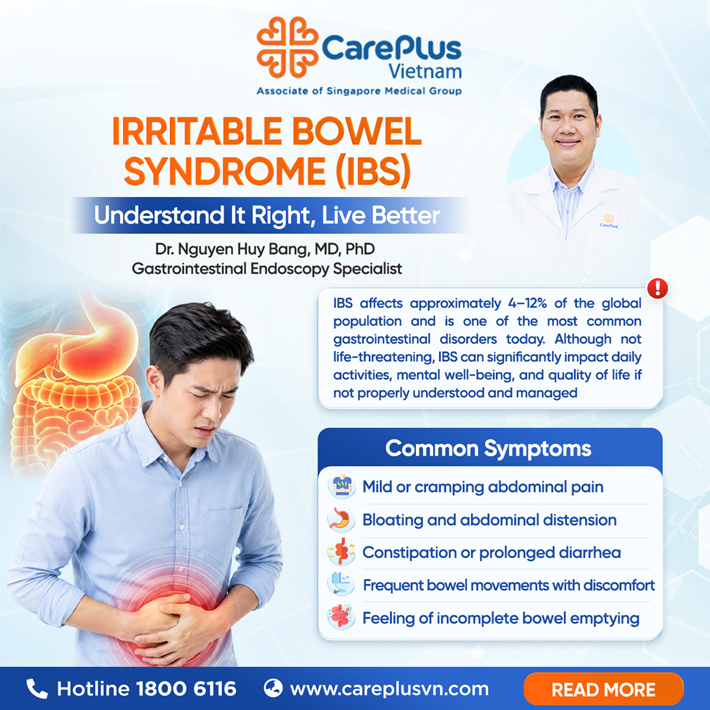
Although IBS is not life-threatening, it can significantly affect daily activities, mental well-being, and overall quality of life if not properly understood and managed.
1️⃣ What is IBS?
Irritable Bowel Syndrome (IBS) is a chronic functional gastrointestinal disorder characterized by recurrent abdominal pain associated with changes in bowel habits, such as:
🔸 Diarrhea
🔸 Constipation
🔸 Or alternating between both
A key feature of IBS is that:
🔸 Symptoms may persist for a long time
🔸 Yet no obvious structural abnormalities are usually found during endoscopy or laboratory tests
👉 IBS is currently considered a disorder involving the “gut–brain axis,” meaning there is abnormal interaction between the nervous system and the digestive tract.
IBS is classified into 4 subtypes:
◾️ IBS-C: constipation-predominant
◾️ IBS-D: diarrhea-predominant
◾️ IBS-M: mixed diarrhea and constipation
◾️ IBS-U: unclassified subtype
2️⃣ How common is IBS?
IBS is one of the most common gastrointestinal disorders worldwide, affecting approximately 4–12% of the population.
It is more common among:
🔸 Young and middle-aged adults
🔸 Women more than men
🔸 Individuals experiencing frequent stress, anxiety, or irregular sleep patterns
In Vietnam, IBS is also a very common reason for long-term gastroenterology consultations.
Although not dangerous, IBS can still:
🔸 Cause prolonged discomfort
🔸 Affect work and daily life
🔸 Lead to anxiety due to recurring symptoms
3️⃣ What causes IBS?
There is currently no single identified cause of IBS.
It is considered a multifactorial disorder involving digestive, neurological, and psychological factors.
🔻 Stress and the gut–brain axis
Chronic stress may alter intestinal contractions and increase pain sensitivity.
This explains why many people experience:
◾️ Abdominal pain during stress
◾️ Diarrhea before meetings or exams
◾️ Worsening symptoms during prolonged pressure
🔻 Imbalance of gut microbiota
The gut contains billions of beneficial bacteria that support digestion and protect the intestinal lining.
In people with IBS, this microbiome may become imbalanced, leading to:
◾️ Bloating
◾️ Abdominal distension
◾️ Persistent digestive discomfort
🔻 Post-infectious IBS
Some people develop IBS after:
◾️ Food poisoning
◾️ Acute diarrhea
◾️ Viral or bacterial gastroenteritis
Even after recovery, the intestines may remain overly sensitive for a long time.
🔻 Trigger foods
Certain foods may worsen IBS symptoms, including:
◾️ Coffee
◾️ Alcohol
◾️ Spicy foods
◾️ Fatty or greasy foods
◾️ Foods that are difficult to digest or produce gas
4️⃣ Common symptoms of IBS
People with IBS commonly experience:
🔸 Mild or cramping abdominal pain
🔸 Bloating and abdominal distension
🔸 Persistent constipation or diarrhea
🔸 Frequent bowel movements with discomfort
🔸 Feeling of incomplete bowel emptying
Symptoms often:
🔸 Recur over many months
🔸 Become worse during stress or after meals
🔸 Fluctuate over time
5️⃣ One important point
Abdominal pain is essential for the diagnosis of IBS.
If someone only has bloating or bowel habit changes without abdominal pain, it may not be sufficient for an IBS diagnosis.
6️⃣ When should you seek medical attention?
IBS is usually not dangerous. However, the following warning signs require evaluation by a gastroenterologist to rule out other conditions:
🔺 Blood in stool
🔺 Unexplained weight loss
🔺 Persistent fever
🔺 Anemia
🔺 Increasing abdominal pain
🔺 Symptoms first appearing after age 50
🔺 Family history of colorectal cancer or inflammatory bowel disease
7️⃣ Can IBS be controlled?
The answer is yes.
Although IBS is a chronic and recurrent condition, most patients can manage symptoms effectively by:
✅ Adjusting their diet appropriately
✅ Maintaining regular sleep habits
✅ Reducing stress
✅ Increasing physical activity
✅ Following medical advice and treatment recommendations
8️⃣ Habits that may help improve IBS
✅ Eat meals regularly
✅ Limit trigger foods
✅ Drink enough water
✅ Exercise regularly
✅ Get enough sleep
✅ Maintain emotional balance
✨ IBS is a common digestive disorder that is often misunderstood.
While it is not life-threatening, IBS can greatly affect quality of life if symptoms persist and are not properly managed.
👉 Understanding IBS, recognizing warning signs, and building healthy lifestyle habits are important steps toward living better with this condition.