UNDERSTANDING GASTROENTERITIS IN CHILDREN
2/6/2026 9:11:25 AM
Gastroenteritis is a common condition in young children, particularly during periods of seasonal changes or after exposure to infectious sources. Although most cases are self-limiting, gastroenteritis can still lead to serious complications such as dehydration and electrolyte imbalance if not managed appropriately and in a timely manner.
The following article, prepared by Dr. Dang Ngoc Van Anh, MD (Specialist Level I), aims to help parents better understand gastroenteritis in children, as well as safe and effective prevention and treatment measures.
1. What is gastroenteritis?
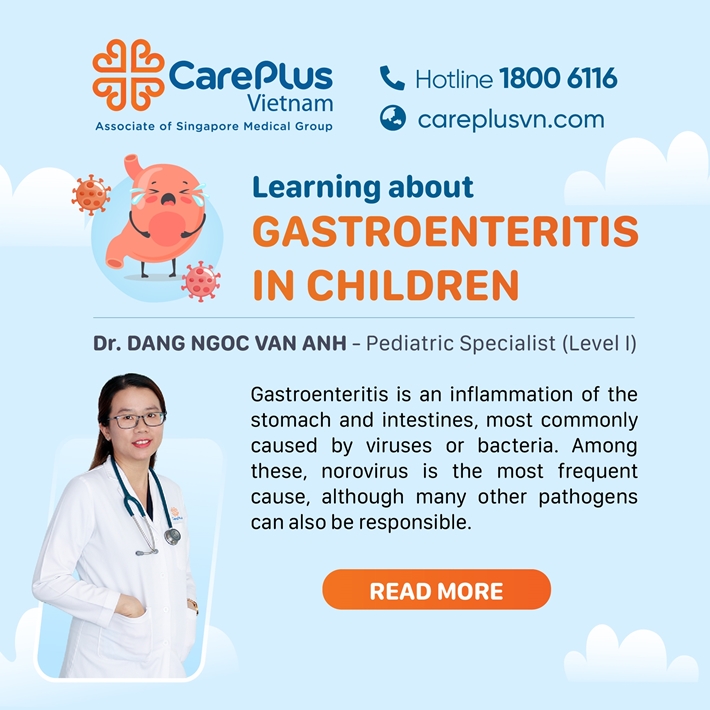
Gastroenteritis is an inflammation of the stomach and intestines. It can be caused by viral or bacterial infections. One of the most common causes of gastroenteritis is norovirus, although other viruses and bacteria can also cause this condition.
2. How is gastroenteritis transmitted?
-
Touching an infected person or contaminated surfaces without proper hand hygiene. Infants and young children are particularly vulnerable as they frequently put their hands or toys into their mouths.
-
Consuming food or drinking water contaminated with pathogens. If food handlers do not wash their hands properly, viruses or bacteria can be transmitted to food, leading to illness—commonly referred to as food poisoning.
3. What are the symptoms of gastroenteritis?
The most common symptoms are diarrhea, vomiting, or both. These symptoms often begin suddenly and may worsen rapidly.
When gastroenteritis is caused by an infection, children may also experience:
-
Fever
-
Headache or body aches
-
Abdominal pain or cramping
-
Loss of appetite
Frequent diarrhea and vomiting can easily lead to dehydration. Signs of dehydration may include:
-
Increased thirst and fatigue
-
Dizziness, lethargy
-
Decreased urine output, dark-colored urine
⚠️ Important note:
Severe dehydration can be life-threatening, especially in infants and young children. Parents should closely monitor their child and seek medical attention promptly if any concerning signs appear.
4. Does a child with gastroenteritis need laboratory tests?
👉 Usually not.
Doctors can often diagnose gastroenteritis based on symptoms, physical examination, and assessment of the child’s hydration status.
👉 Tests are only ordered when necessary, to identify the cause or assess disease severity.
Possible tests include:
-
Blood tests: in cases of high fever, bloody diarrhea, or signs of dehydration
-
Stool tests: stool microscopy or culture to identify causative bacteria or viruses
-
Abdominal ultrasound: if the child has severe abdominal pain, abdominal distension, bloody stools, or persistent vomiting
⚠️ Parents should bring the child to a healthcare facility if symptoms persist, worsen, or do not improve with home care.
5. What can parents do to help their child feel better?
The most important measure is adequate fluid replacement, as vomiting and diarrhea cause significant loss of water and electrolytes.
-
Offer fluids whenever possible, in small sips every 15–30 minutes. Gradually increase the amount as the child improves.
-
Children with frequent vomiting or diarrhea should receive oral rehydration and electrolyte replacement to prevent dehydration:
-
Breastfed infants should continue breastfeeding.
-
Oral rehydration solution (ORS) may be used as directed by a doctor. If the child vomits, offer small spoonfuls every few minutes.
-
If the child drinks a large amount of plain water, ensure they also eat or breastfeed to maintain electrolyte balance.
-
When the child is able to eat, offer easily digestible foods such as lean meat, vegetables, fruits, bread, and cereals.
-
Avoid fatty or high-sugar foods.
-
Avoid soft drinks and sugary fruit juices, as they may worsen diarrhea.
-
Do not give anti-diarrheal or abdominal pain medications without medical advice.
6. How is gastroenteritis treated?
Most children do not require specific treatment, as symptoms usually resolve on their own. However, severe dehydration requires intravenous fluid therapy in a hospital setting.
-
Viral gastroenteritis does not require antibiotics.
-
Bacterial gastroenteritis may require antibiotics, depending on the cause and severity, as determined by the physician.
7. Can gastroenteritis be prevented?
To reduce the risk of infection or transmission, parents can:
-
Wash hands frequently with soap and water, especially after using the toilet, changing diapers, and before eating.
-
Note: Alcohol-based hand sanitizers are not effective against some viruses such as norovirus.
-
Teach children proper handwashing with soap after using the toilet and before meals.
-
For young children, parents should assist with handwashing.
-
Avoid changing diapers near areas where food is prepared.
-
Ensure the child receives the rotavirus vaccine, which helps prevent severe or potentially life-threatening infections. Rotavirus is a common cause of viral gastroenteritis in children.
8. When should a child see a doctor?
🚨 Parents should seek medical care immediately if the child has any of the following:
-
Signs of dehydration: extreme fatigue, excessive thirst, dizziness, lethargy
-
Diarrhea or vomiting lasting several days
-
Vomiting blood, bloody stools, or severe abdominal pain
-
Inability to drink or keep down fluids for several hours (in children)
-
Decreased urination: no urination for 6–8 hours during the day, or no wet diapers for 4–6 hours
Reference: UpToDate – Patient Education: Gastroenteritis in Babies and Children