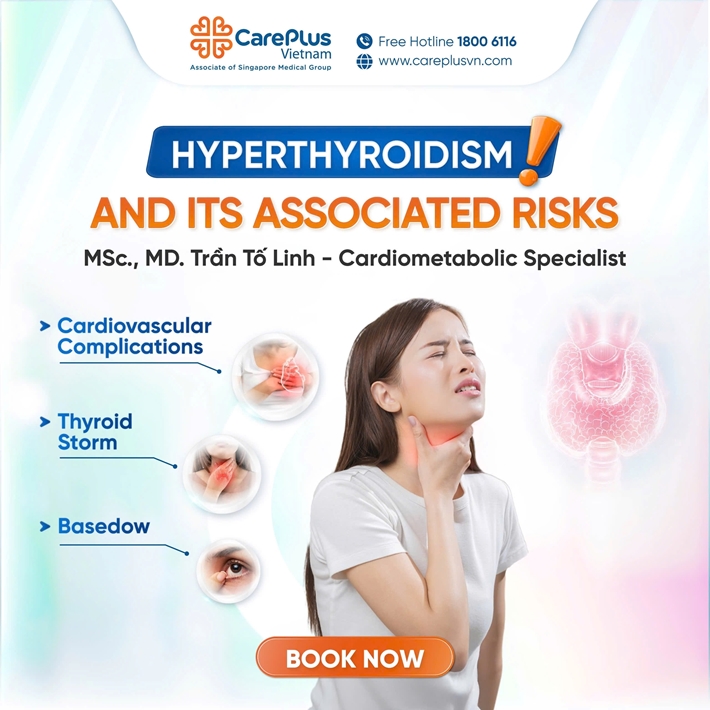
HYPERTHYROIDISM AND ITS ASSOCIATED RISKS
3/28/2025 10:28:06 AM
🔴 Hyperthyroidism is a clinical syndrome caused by excessive production of thyroid hormones (thyroxine - T4 and triiodothyronine - T3) by the thyroid gland, leading to increased levels of free thyroid hormones in the bloodstream.
🔻 The condition can result from various causes, with the most common being:
● Graves' disease (Basedow’s disease): An autoimmune disorder in which the body's immune system attacks the thyroid gland, stimulating it to produce excessive thyroid hormones.
● Toxic nodular goiter: The presence of overactive nodules (lumps) in the thyroid gland that produce excessive thyroid hormones.
● Thyroiditis: Inflammation of the thyroid gland that can temporarily release large amounts of thyroid hormones into the bloodstream.
🔻 Hyperthyroidism accelerates metabolic processes in the body, leading to diverse clinical manifestations affecting multiple organ systems, particularly the cardiovascular, nervous, and metabolic systems.
Common Symptoms of Hyperthyroidism by Affected Organ Systems
1️⃣ Metabolic Symptoms:
● Unintentional weight loss despite normal eating habits or increased appetite.
● Excessive sweating, heat intolerance.
● Increased bowel movements, possibly leading to diarrhea.
2️⃣ Cardiovascular Symptoms:
● Rapid heart rate, palpitations.
● Mild hypertension.
● Increased risk of atrial fibrillation and heart failure if left untreated.
3️⃣ Neuromuscular Symptoms:
● Hand tremors.
● Muscle weakness, especially in proximal muscles, making activities like climbing stairs or standing up from a chair difficult.
● Fatigue, anxiety, irritability.
● Sleep disturbances, insomnia.
4️⃣ Ophthalmic Symptoms (especially in Graves' disease):
● Bulging eyes.
● Excessive tearing.
● Light sensitivity.
● Conjunctivitis, corneal damage if not well-managed.
👉 Note: Symptoms of hyperthyroidism vary from person to person, and severity also differs. Diagnosis and treatment should be carried out by an endocrinology specialist.
🔴 If left undiagnosed and untreated, hyperthyroidism can lead to severe complications, including:
1️⃣ Cardiovascular Complications:
Hyperthyroidism increases the risk of atrial fibrillation, which can lead to blood clot formation and stroke. Poorly controlled hyperthyroidism can also result in high-output heart failure.
2️⃣ Thyroid Storm:
A life-threatening medical emergency caused by a sudden and excessive increase in thyroid hormone levels. Immediate intervention is required to prevent fatal complications.
Symptoms include high fever, altered mental status, and severe tachycardia.
3️⃣ Graves' Ophthalmopathy:
In Graves' disease, eye bulging can lead to severe complications. If untreated, it may cause corneal damage and even vision loss.
✅ Early and proper treatment of hyperthyroidism is crucial in preventing these dangerous complications.
🔴 When experiencing symptoms suggestive of hyperthyroidism, patients should visit a healthcare facility for evaluation and necessary tests. Depending on symptoms and medical history, an endocrinologist may order the following diagnostic tests:
1️⃣ Blood Tests:
● Thyroid function tests: Measurement of TSH (thyroid-stimulating hormone), FT3 (free triiodothyronine), and FT4 (free thyroxine) levels. In hyperthyroidism, FT3 and FT4 are elevated, while TSH is suppressed.
● Autoantibody testing: TRAb (thyroid-stimulating hormone receptor antibodies) is positive in 80–90% of hyperthyroid cases.
2️⃣ Thyroid Ultrasound:
Helps assess thyroid size, structure, and detect abnormal nodules.
3️⃣ Thyroid Scintigraphy:
● Uses radioactive substances to evaluate thyroid function and imaging.
● Helps differentiate between causes of hyperthyroidism, such as Graves' disease or toxic nodular goiter.
👉 Hyperthyroidism is a common endocrine disorder that affects multiple organ systems. Without timely treatment, it can lead to severe complications, threatening both health and quality of life. If you notice any suspicious symptoms, seek medical attention for appropriate diagnosis and treatment