MIDDLE EAR INFECTION IN CHILDREN: UNDERSTANDING AND CARING FOR YOUR CHILD DURING THE SICK SEASON
6/27/2025 3:34:20 PM
MIDDLE EAR INFECTION IN CHILDREN: UNDERSTANDING AND CARING FOR YOUR CHILD DURING THE SICK SEASON
Middle ear infections can be a recurring concern for many families—especially during the sick season when children's immune systems are more vulnerable. Understanding your child’s condition and how to care for them properly can make a big difference. Let's explore the facts and practical care tips from Dr. Phạm Quang Vinh, Pediatric Specialist (Level II).
1️⃣ Otitis Media – The Unwelcome Intruder
Otitis media is an infection or inflammation of the middle ear, which includes the tympanic membrane (eardrum), Eustachian tube, and small bones located behind the eardrum. It most commonly affects children between 6 months and 2 years of age due to their underdeveloped ear anatomy.
🔸 Common signs and symptoms include:
▪️ Fever, irritability, frequent crying, and trouble sleeping
▪️ Ear pain: children may tug or rub their ears constantly (as if experiencing discomfort or itchiness)
▪️ Ear discharge: yellow, white, or pinkish fluid may drain from the ear—a key warning sign!
▪️ Decreased responsiveness to sounds (e.g., the child doesn't turn when called or seems unresponsive to noises)
🔸 Common causes:
▪️ Following a cold, flu, pharyngitis, or adenoid infection—viruses or bacteria can travel up the Eustachian tube
▪️ Milk or water entering the ear during improper bottle feeding
▪️ Congenital anomalies of the nose and throat
▪️ Other factors: sudden weather changes, exposure to air pollution
🔸 Possible complications of untreated otitis media:
▪️ Mastoiditis (infection of the bone behind the ear)
▪️ Meningitis
▪️ Tympanic membrane perforation
▪️ Sepsis (blood infection)
2️⃣ Why Extra Caution is Needed During the Sick Season / COVID-19 Period
Children are more susceptible to colds and flu—common gateways to ear infections
Parents may hesitate to bring children to the hospital for fear of COVID-19 exposure but delaying care when warning signs appear is dangerous!
3️⃣ At-Home Care: Simple. Practical. Effective.
✅ Pain and fever management:
▪️ Administer Paracetamol (Acetaminophen) or Ibuprofen according to your child’s weight and doctor’s advice
▪️ Paracetamol: 10–15 mg/kg/dose every 4–6 hours as needed
▪️ Ibuprofen: 5–10 mg/kg/dose every 6 hours as needed
▪️ Avoid aspirin in young children due to the risk of Reye’s syndrome
✅ Nasal and throat hygiene:
▪️ Use saline drops or spray to clear nasal passages
▪️ Gently suction mucus if the nose is congested (using a bulb syringe or appropriate nasal aspirator)
▪️ Nasal irrigation as needed
✅ When to seek medical attention immediately:
▪️ Fever over 39°C (102.2°F) lasting more than 48 hours
▪️ Worsening ear pain, ear discharge, or pus
▪️ Lethargy, refusal to feed, seizures
▪️ Swelling or redness behind the ear, or neck stiffness (possible serious complications)
⚠️ 6 “DON’Ts” Every Parent Should Remember:
❌ Do not use antibiotics without a doctor’s prescription
❌ Do not put ear drops or any medications into the ear unless instructed by a physician
❌ Do not insert cotton swabs or any objects into your child’s ear canal
❌ Do not let infants older than 6 months bottle-feed while lying down
❌ Do not expose your child to cigarette smoke or polluted environments
❌ Do not ignore follow-up appointments or warning signs
4️⃣ Prevention During the Sick Season / Pandemic
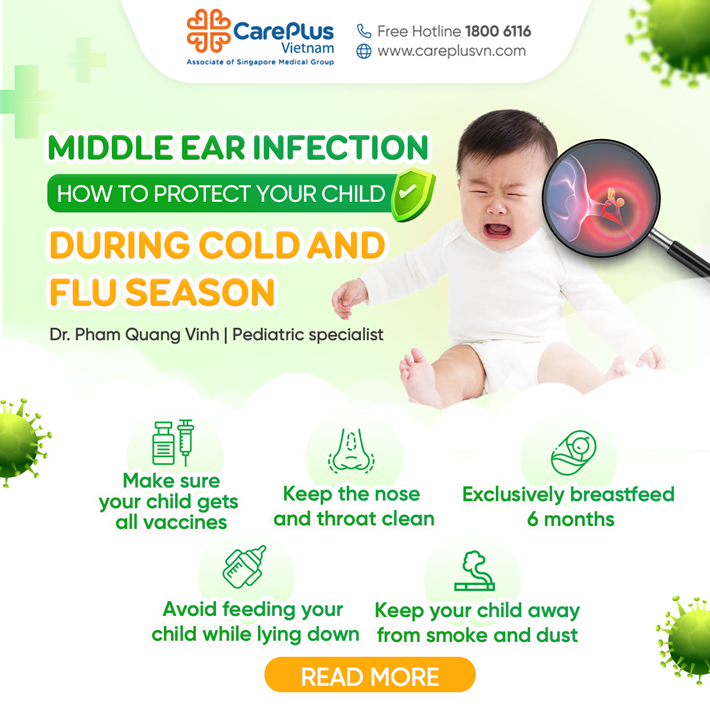
▪️ Keep your child up to date on routine vaccinations: Hib, Influenza, and Pneumococcal vaccines help reduce the risk of ear infections
▪️ Maintain good nasal hygiene: rinse with saline when needed
▪️ Exclusively breastfeed for the first 6 months to boost immunity
▪️ Avoid bottle feeding in a lying position
▪️ Avoid exposure to cigarette smoke, dust, and polluted air
💬 Message from the Doctor:
"Middle ear infections are manageable when detected early and treated properly at home and under a doctor’s care. During the sick season or COVID-19 outbreaks, stay vigilant with preventive care, but don’t delay a doctor visit if your child shows concerning symptoms!"
References:
-
UpToDate: Acute Otitis Media in Children, Paula Tahtinen MD, PhD; Holly M. Frost MD, PhD, FAAP (April 2, 2025)
-
SAGE Journal: COVID-19 and Acute Otitis Media in Children – A Case Series, Holly M. Frost et al. (March 15, 2022)
-
Acute Otitis Media – Information for Parents, Irish Association for Emergency Medicine