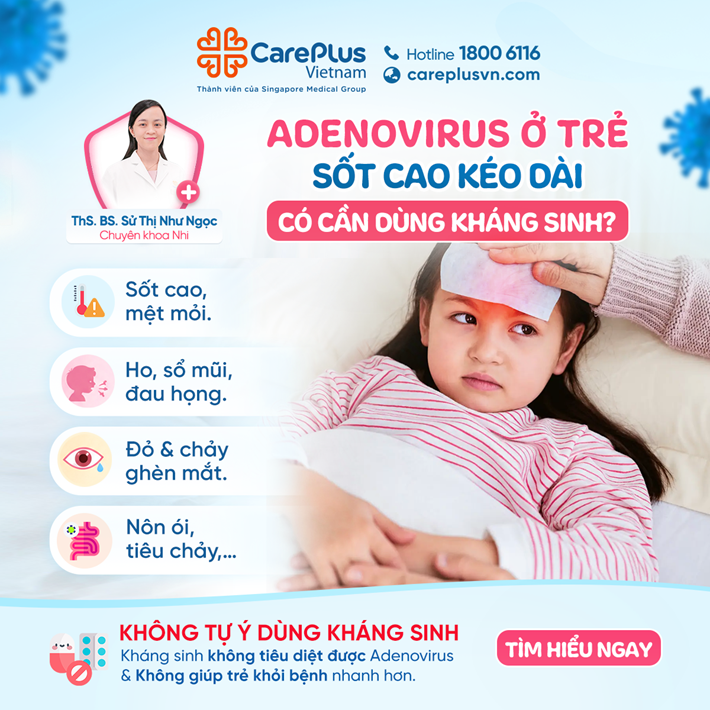
ADENOVIRUS IN CHILDREN: PROLONGED HIGH FEVER DOES NOT ALWAYS REQUIRE ANTIBIOTICS!
10/27/2026 4:58:03 PM
Many parents panic when they see their child running a high fever for days and immediately turn to antibiotics. However, if the culprit is Adenovirus, taking antibiotics is not only ineffective but also harmful to the child's health!
Join MSc. Dr. Sử Thị Như Ngọc - Department of Pediatrics to find out why antibiotics are "powerless" against this virus and key notes to care for children safely and scientifically!
What is Adenovirus? Adenovirus is an extremely common group of viruses in children that loves to "attack" the respiratory system, eyes, and digestive tract. In Ho Chi Minh City, this virus circulates year-round and easily outbreaks during the summer, especially in crowded places for children such as daycare centers, schools, or swimming pools.
The virus spreads mainly through:
-
Droplets: When an infected person coughs or sneezes.
-
Direct contact: Touching an infected person's nasopharyngeal secretions.
-
Indirect surface contact: Through unwashed hands, toys, or virus-contaminated objects.
-
Enclosed environments: Close contact in crowded spaces.
Common Symptoms in Children If a child is infected with Adenovirus, parents may observe the following typical symptoms:
-
High fever, which can last for many days.
-
Cough, runny nose, nasal congestion, sore throat.
-
Red eyes, eye discharge.
-
Nausea, diarrhea, abdominal pain.
-
Fatigue, loss of appetite.
Prolonged high fever is a common manifestation of Adenovirus, but it does not mean the child needs antibiotics.
Disease Severity Levels
-
Mild: Fever, cough, runny nose, sore throat, conjunctivitis (pink eye), or diarrhea; the child is alert and able to eat and drink.
-
Moderate: Pneumonia present, tachypnea (fast breathing) by age, reduced food/fluid intake, SpO₂ 94–95%.
-
Severe: Difficulty breathing, chest retractions, grunting, poor feeding, SpO₂ 90–93%.
-
Critical: Severe respiratory failure, SpO₂ <90%, altered consciousness, shock, or multi-organ failure.
Treatment Principles:
IMPORTANT NOTE:
- There are currently no specific antiviral drugs routinely used for Adenovirus in children.
- Antibiotics DO NOT kill viruses and do not help children recover faster.
- Antibiotics are only used when prescribed by a doctor in cases of bacterial infection or bacterial superinfection.
Guidelines for Home Care (Mild cases):
-
Rest: Keep the space airy, cool, and clean.
-
Rehydration & Electrolytes: Give the child plenty of water and oral rehydration solution (ORS) as directed.
-
Nutrition: Divide meals into smaller portions; provide soft, easily digestible foods.
-
Proper Fever Management: Use fever-reducing medication according to the correct dosage and weight.
-
Close Monitoring: Pay attention to the child's breathing rate and signs of dehydration.
WHEN TO TAKE YOUR CHILD TO THE EMERGENCY ROOM IMMEDIATELY? Take your child to the nearest medical facility right away if any of the following danger signs appear:
-
Difficulty breathing, chest retractions, grunting, or cyanosis (bluish skin/lips).
-
Drowsiness, lethargy, difficulty waking up, or seizures.
-
Refusing to nurse/drink or vomiting continuously.
-
Signs of dehydration, decreased urination.
-
Cold extremities, mottled skin.
-
Rapid deterioration of the child's condition.
Proactively Prevent Disease for Your Child
-
Wash hands frequently with soap.
-
Cover your mouth when coughing or sneezing.
-
Limit close contact with people who are sick.
-
Do not share towels, cups, or personal items.
-
Clean toys and surfaces that children frequently touch.
-
Keep children home from school when sick to limit spreading.
Reference source: Guidelines for diagnosis, treatment, prevention, and infection control of Adenovirus disease in children (Issued with Decision No. 3451/QĐ-BYT dated December 26, 2022, by the Ministry of Health).
Inbox the fanpage or call the free hotline 1800 6116 to book an appointment today.