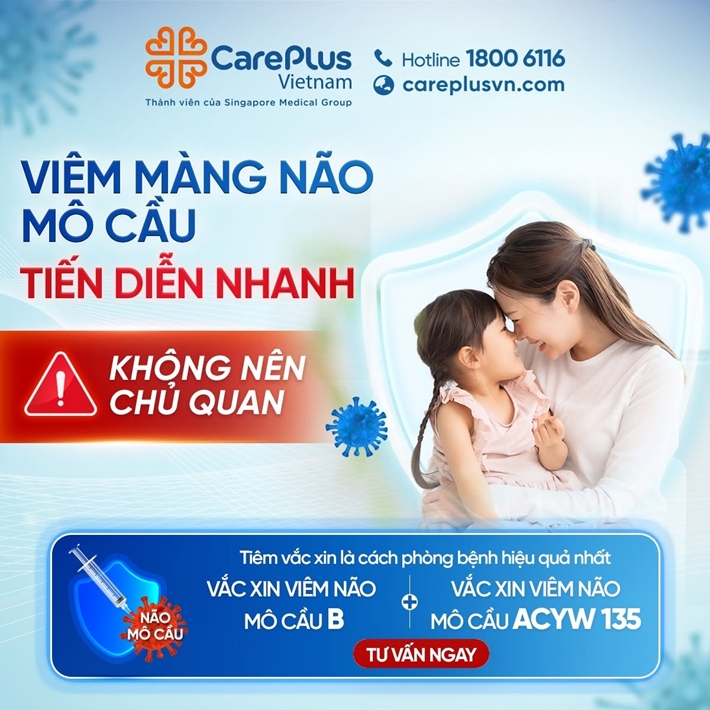
RAPIDLY PROGRESSIVE MENINGOCOCCAL MENINGITIS: DO NOT BE COMPLACENT
10/27/2026 9:35:01 AM
👩🏻⚕️ Medical consultation provided by Specialist Doctor 1 (Dr.) Tran Thi Tu Hang – Department of Pediatrics, CarePlus International Clinics System.
⚠️ According to information from the Ministry of Health and functional authorities, nationwide records show 24 cases of meningococcal disease with 4 fatalities from the beginning of the year through April 2026, of which children under 15 years old accounted for up to 46% of total cases.
❗️ Recently in October 2026, Ho Chi Minh City alone recorded a cluster of 4 to 5 cases of group B meningococcal disease involving students (including 1 fatality at a secondary school); however, local health authorities announced that this cluster has been brought under control. Hanoi has also recorded 2 additional cases of meningococcal disease.
❗️ Meningococcal bacteria circulate everywhere and can cause sporadic cases or full outbreaks. In Vietnam, the disease usually appears in isolated cases, but the risk increases during cold weather—especially in crowded, cramped places with poor sanitation such as schools, dormitories, and military barracks.
⁉️ Why is this disease so dangerous? Let's explore with CarePlus to recognize the early signs and proactively protect your health.
1️⃣ What is Meningococcal Meningitis?
Meningococcal meningitis is a dangerous, acute bacterial infection with high transmission potential. It often onset suddenly with symptoms such as severe headache, fever, nausea and vomiting, stiff neck, lethargy, or coma. A characteristic petechial rash (star-shaped or purpuric rash) may appear, sometimes accompanied by blisters.
Some cases progress rapidly within just a few hours into septic shock and multi-organ failure, carrying a extremely high risk of death (up to 50% if not treated promptly). Many survivors face severe long-term sequelae such as deafness, brain damage, and limb necrosis. If detected early and given aggressive medical treatment, the mortality rate drops to between 5% and 15%.
2️⃣ Causes of Meningococcal Disease
▪️ Meningococcal disease is caused by the bacterium Neisseria meningitidis. Based on its capsular polysaccharide structure, N. meningitidis is categorized into over 12 serogroups, among which groups A, B, C, W, and Y are the most common causes of human illness.
3️⃣ Symptoms of Meningococcal Meningitis
▪️ Early Warning Signs: Sudden high fever, severe headache, nausea or vomiting, stiff neck, and petechial skin rash. In infants and young children, symptoms may be atypical, such as lethargy, poor feeding, irritability, crying, or a bulging fontanelle.
⚠️ When suspecting any symptoms, immediately bring the patient to a medical facility for timely diagnosis and treatment.
4️⃣ Transmission Routes
▪️ The disease spreads mainly through respiratory droplets (saliva, nasal or throat secretions) during close contact with infected individuals or asymptomatic carriers. ▪️ The disease progresses very rapidly and can be fatal within 24 to 48 hours.
5️⃣ High-Risk Groups
▪️ Young children, pupils, and students living in group settings such as dormitories, nurseries, and schools. ▪️ Individuals with weakened immune systems.
6️⃣ Preventive Measures
▪️ Practice personal hygiene and wash hands frequently with soap. ▪️ Wear a mask in crowded places and cover your mouth when coughing or sneezing. ▪️ Keep homes and classrooms well-ventilated and clean; avoid sharing personal items like cups, towels, and toothbrushes. ▪️ Limit close contact with people displaying symptoms of respiratory infections.
♦️ Vaccination is currently the most proactive and effective preventive measure. Meningococcal vaccines can be administered to children, adolescents, people living in communal environments, and other high-risk individuals. People are advised to get vaccinated at qualified medical facilities to ensure safety and efficacy.
🔔 REFERENCE VACCINATION SCHEDULES
🔸 Meningococcal Group B Vaccine (Bexsero – Group B protection)
▶️ Infants from 2 months to under 6 months old (2 primary doses):
-
Dose 1: First injection.
-
Dose 2: At least 2 months after Dose 1.
-
Booster: Recommended at 12 months of age or older, at least 6 months after Dose 2.
▶️ Infants from 6 months to under 12 months old (2 primary doses):
-
Dose 1: First injection.
-
Dose 2: At least 2 months after Dose 1.
-
Booster: Recommended at 12 months of age or older, at least 2 months after Dose 2.
▶️ Children from 12 months to under 24 months old (2 primary doses):
-
Dose 1: First injection.
-
Dose 2: At least 2 months after Dose 1.
-
Booster: Recommended at least 12 months after Dose 2.
▶️ Children aged 2 years through adults aged 50 (2 primary doses):
-
Dose 1: First injection.
-
Dose 2: At least 1 month after Dose 1.
🔸 Meningococcal ACYW135 Vaccine (MenQuadfi – Groups A, C, Y, W-135 protection)
▶️ Infants from 6 weeks to under 6 months old:
-
Dose 1: First injection.
-
Dose 2: 2 months after Dose 1.
-
Dose 3: 2 months after Dose 2.
-
Booster: Administered from 12 months of age, at least 2 months after Dose 3.
▶️ Infants from 6 months to under 12 months old:
-
Primary: 1 single dose.
-
Booster: Administered from 12 months of age, at least 2 months after Dose 1.
▶️ Children aged 12 months and older, and adults:
-
Single Dose: 1 dose only.
▶️ Individuals aged 15 and older (who completed the age-appropriate schedule above): If persistent risk remains, an additional dose is recommended 4 years after the previous dose.
🔸 Meningococcal ACYW135 Vaccine (Menactra – Groups A, C, Y, W-135 protection)
-
Children 9 months to under 2 years old: 2 doses; Dose 2 given at least 3 months after Dose 1.
-
Children aged 2 years and older through adults aged 55: Single dose only.
-
Booster Dose: For individuals aged 15–55 years at persistent risk, a 2nd dose booster is recommended after at least 4 years.
🔔 CarePlus International Clinics currently offer full range of Meningococcal Meningitis vaccines. If parents wish to vaccinate and protect their children, please inbox our fanpage or contact our toll-free hotline 1800 6116 to schedule an appointment today!
Reference Source:
-
According to Tuoi Tre Newspaper: https://tuoitre.vn/bo-y-te-thong-tin-ve-chum-ca-nhiem-nao-mo-cau-mot-hoc-sinh-tu-vong-tai-tphcm-100261017203144627.htm