What should be noted after Gastrointestinal Endoscopy?
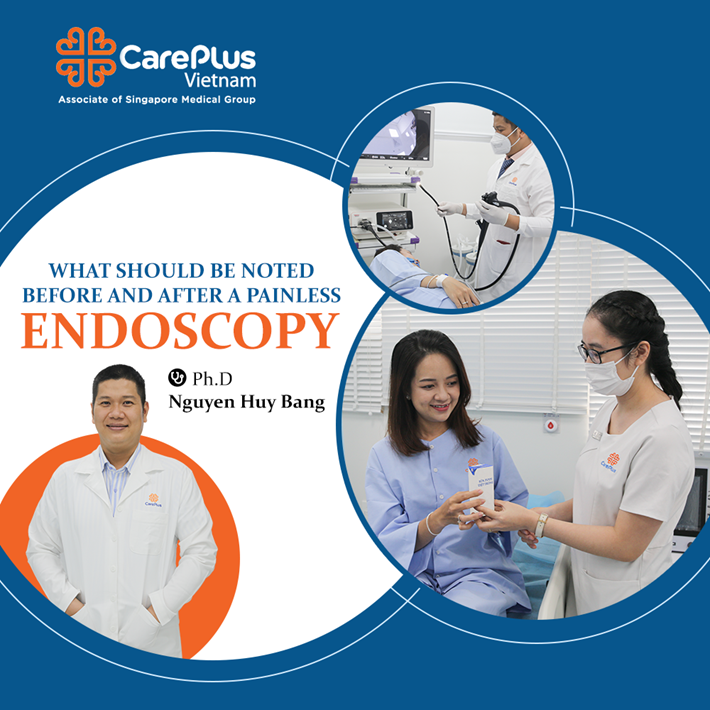
With many outstanding advantages from the painless gastrointestinal endoscopy method: Especially reducing the feeling of pain and discomfort, many people choose it. So after performing this endoscopic method, what should be noted to have the most accurate results. Let CarePlus refer to the information below to find the answer.
9/21/2022 2:18:32 PM
a. Endoscopy of the esophagus - stomach - duodenum:
After endoscopy - Esophagus - Stomach - Duodenum The patient is completely normal. Sometimes there is a feeling of sore throat, a little fullness, usually after about 30 minutes, the discomfort completely disappears.
In case of pre-anesthesia, it takes about 1 hour to stay awake and must be accompanied by a family member.
b. Colonoscopy:
After colonoscopy, the patient should do the following:
+ Rest in the waiting room for a short time before leaving.
+ Note some common problems after rectal examination such as: Feeling less abdominal pain or feeling of straining, the abdomen feels slightly bloated, this is a normal symptom and disappears quickly.
In case the patient feels a lot of pain or is very uncomfortable, it is necessary to immediately notify the nurse or doctor for timely treatment.
c. After pre-anesthesia endoscopy: You should not drive, use dangerous machines, enter into important contracts.
d. In case of colon polyp removal:
You need to pay attention to monitor bleeding complications after polyp removal and the risk of colon perforation (although the rate is very very rare). Suggested symptoms are as follows: black or red bloody stools, severe abdominal pain, fever, abdominal distention, ...... if you have any suspicious symptoms, you need to notify the medical staff of the operating room soon for instructions. and timely support.