IRON SUPPLEMENTATION IN CHILDREN – DON’T LET IRON DEFICIENCY AFFECT YOUR CHILD’S DEVELOPMENT
5/11/2026 10:08:21 AM
Iron deficiency is a common condition in young children, yet it is often overlooked. Proper and timely iron supplementation from an early age is the “key” to supporting a child’s overall physical and cognitive development.
Join MSc., MD. Nguyễn Hữu Mai Khanh to learn more about the important role of iron in children’s health, as well as safe and effective ways to supplement iron so parents can confidently support their child through every stage of development.
1. Why Is Iron Important for Children?
Iron is an essential nutrient for children’s growth, brain development, and nervous system function. It is also a key component in blood production, so prolonged iron deficiency can lead to anemia.
Children with iron deficiency may develop anemia, resulting in fatigue, pale skin, poor concentration, and impaired physical and cognitive development. This may cause delayed growth, reduced attention span, and memory difficulties.
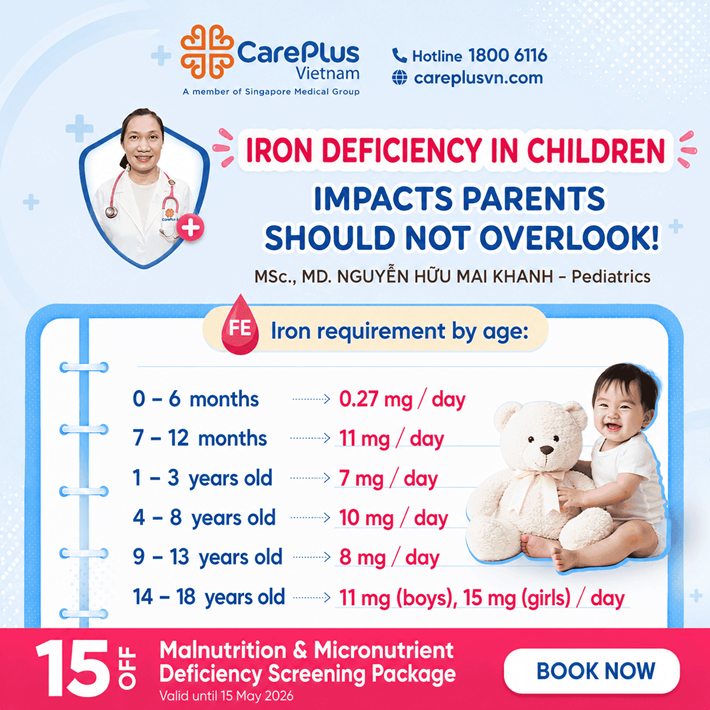
2. Recommended Daily Iron Intake by Age
-
0–6 months: 0.27 mg/day
-
7–12 months: 11 mg/day
-
1–3 years: 7 mg/day
-
4–8 years: 10 mg/day
-
9–13 years: 8 mg/day
-
14–18 years: Boys 11 mg/day | Girls 15 mg/day
3. Who Needs Iron Supplementation?
Full-term, exclusively breastfed infants:
-
Iron supplementation from 4 months of age until iron-rich complementary foods are introduced
-
Recommended dose: 1 mg/kg/day (elemental iron)
(According to the American Academy of Pediatrics)
Premature infants:
-
Iron supplementation from 1 month to 12 months of age
-
Recommended dose: 2 mg/kg/day (elemental iron)
(According to the American Academy of Pediatrics)
Children diagnosed with iron deficiency anemia:
-
Recommended dose: 3–6 mg/kg/day (elemental iron), depending on the doctor’s prescription
4. Important Notes When Supplementing Iron
-
Iron is best absorbed on an empty stomach. Therefore, iron supplements should ideally be taken 1 hour before meals or 2 hours after meals.
-
If a child experiences stomach irritation when taking iron on an empty stomach (such as abdominal pain, nausea, or vomiting), the supplement can be taken during or after meals.
-
If possible, combine iron supplements with vitamin C or vitamin C-rich foods to enhance iron absorption.
-
Certain foods and drinks may reduce iron absorption, including milk, tea, coffee, and carbonated beverages. These should be avoided for 1–2 hours after taking iron supplements.
5. Common Side Effects of Iron Supplementation
-
Black stools (a harmless side effect)
-
More serious side effects may include abdominal pain, constipation, diarrhea, nausea, or vomiting
6. Iron-Rich Foods
Animal-based sources of iron:
- Commonly found in red meat (beef, pork, lamb), seafood (tuna, salmon, shrimp, crab, clams, shellfish), poultry, eggs, and organ meats (liver, kidneys).
Plant-based sources of iron:
- Found in dark green vegetables (spinach, water spinach, broccoli), beans, whole grains, and dried fruits.
Doctor’s Advice to Prevent Iron Deficiency in Children
-
When starting complementary feeding, focus on iron-rich foods such as red meat, liver, eggs, and dark green vegetables
-
Give milk according to the recommended amount for each age group. Excessive milk intake may increase the risk of iron deficiency anemia
-
Use preventive iron supplementation as advised by a doctor
Currently, CarePlus is offering a 15% discount on the Malnutrition & Micronutrient Deficiency Screening Package, valid until May 15, 2026.
📞 Please inbox the fanpage or contact the free hotline 1800 6116 to book an appointment today.