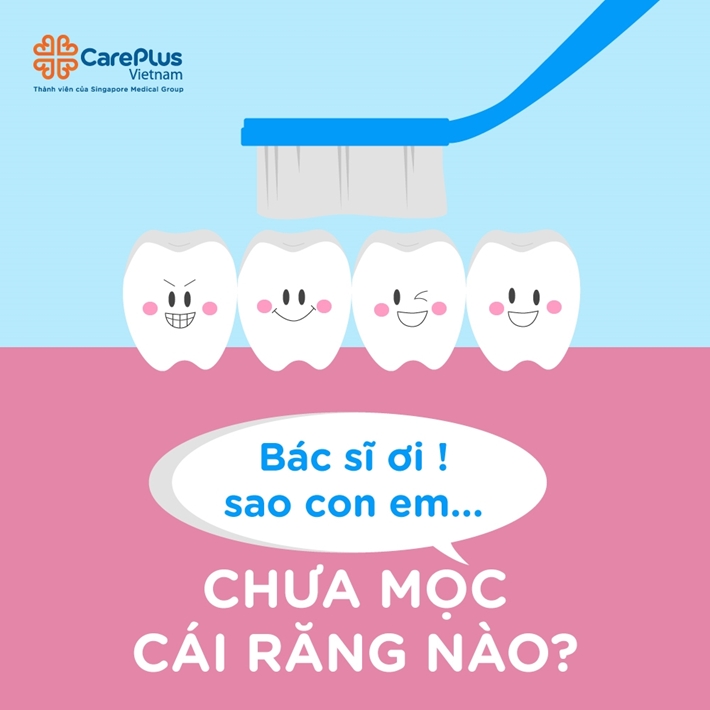
Doctor, why haven’t my children teethed yet?
Parents always look forward to their child's developmental milestones such as turning, sitting, crawling, etc. But why doesn’t the baby have any teeth while the other already have 3 or 4? Does my kid have calcium deficiency, rickets? What disease does the baby have? Whether they have no teeth forever?
6/2/2020 4:15:31 PM
Sharing from MSc. Dr. Le Thi Kim Dung - Pediatrics Specialist of CarePlus International Clinics
“A lot of factors affect late teething, but almost the time kids will teething without any intervention. Rest assured, your child will not missing teeth.”
How important the teeth is?
Teeth are so important and affect:
- Languages development: Imagine you are talking to a kid without 2 front teeth, how do you hear your baby talking? The baby’s pronunciation is not clear. So, the teeth are sufficiently aligned which will affect the ability of pronunciation.
- Chew and eat properly: Proper digestion starts from the mouth. Chewing helps break down food into easily digested sizes, gums are stimulated and developed, and teeth will be cleaned while chewing.
- Development of muscles and jawbones: Chewing helps babies exercise facial muscles, tongue, and jaw muscles. If the jaw muscles are not well developed, the jaw bone is also underdeveloped. Chewing a variety of foods will help our kids develop healthy facial and jaw muscles!
The normal teething process in children
When the baby is born, the germs of teeth are present in the gums. About 6 months old, the teeth will gradually pop out. The first is 2 lower incisors, followed by 4 upper incisors, usually in pairs, one on each side. The usual stages of teething are as follows:
- 11 months: 4 teeth,
- 15 months: 8 teeth,
- 19 months: 12 teeth,
- 23 months: 16 teeth,
- About 3 years old: mostly will grow enough 20 baby teeth.
However, not all babies will have teething in the same cycle.
Some pathologies cause slow teething
Most slow teething cases can be just a normal family’s feature which can be compared with the teething time of parents as children or siblings. Other less common causes:
- Genetic abnormalities: tooth dysplasia, tooth development disorder, Down syndrome, hypothyroidism, pituitary failure, dwarfism due to cartilage aplasia, bone abnormalities,
- Rickets (hereditary pathology: hypophosphatemia),
- Lack of nutrition, anemia
- Cysts or lumps in the gums
- “Without tooth germ completely or partially” pathology (anodontia)
Do your kids need to examine when their teeth are not growing as usual?
Parents should not be too worried because no child has the same eruption. However, if the child does not have any teeth at 16 months old, parents should take them to the dentist or pediatrician to check for any special cause. Remember that whether teeth come out sooner or later, taking care of the baby as soon as the tooth appears is the best thing to help kids have long-term oral health.
------
Author: MSc. Dr. Le Thi Kim Dung - Pediatric Specialist of CarePlus International Clinics
The post was published on Tuoi Tre Magazine on 16th December 2019