CAREPLUS HEALTH NEWS – OCTOBER | INFLUENZA IN CHILDREN – UNDERSTAND THE DISEASE AND LEARN EFFECTIVE PREVENTION!
10/20/2025 1:58:01 PM
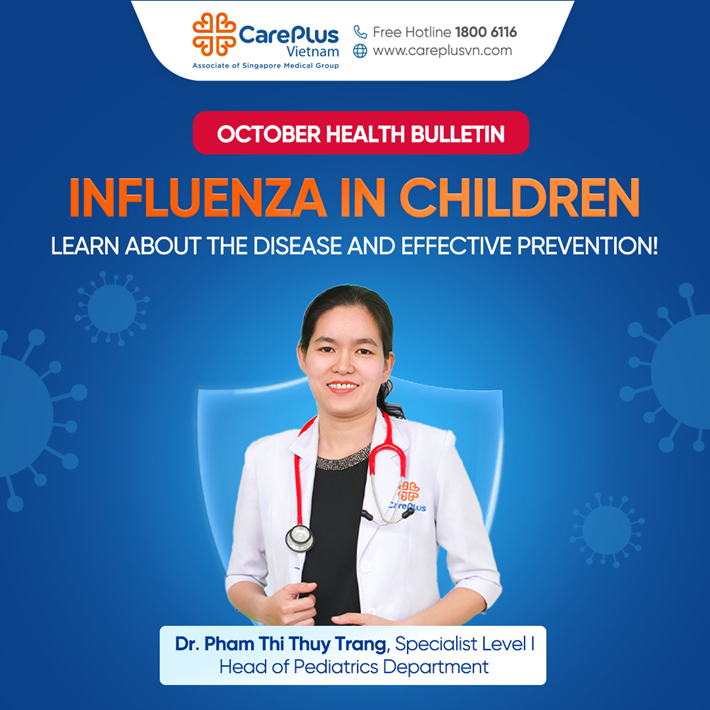
Recently, CarePlus clinics have observed an increase in children presenting with influenza, which has understandably caused concern among parents. Below is essential information on influenza in children, compiled by Dr. Phạm Thị Thùy Trang, MD – Head of Pediatrics at CarePlus Clinic System, to help parents recognize, monitor, and manage the illness effectively.
1. What is Influenza?
Influenza, or the flu, is an infectious disease caused by influenza viruses. It is a leading cause of emergency visits and hospitalizations in children. Globally, influenza accounts for nearly 1 million hospitalizations annually in children under 5 years old.
2. Common Symptoms
In children, influenza can range from mild to severe. Typical symptoms include:
-
Fever (sometimes high)
-
Cough, runny or congested nose
-
Fatigue, muscle aches, headache
-
In children under 4 years, symptoms may include vomiting and diarrhea
Note: Some children may not have a fever but can still be infected. The illness usually lasts 5–10 days and resolves on its own in most cases.
3. Potential Complications
Influenza is not always mild. Some children may develop serious complications, including:
-
Pneumonia (either viral or secondary bacterial)
-
Otitis media (middle ear infection)
-
Seizures, encephalitis, meningitis
-
Myocarditis, myositis, severe respiratory distress
Note: Children with underlying conditions (asthma, congenital heart disease, immunodeficiency) or those under 2 years old are at higher risk for complications.
4. How Influenza Spreads
The influenza virus spreads through respiratory droplets when coughing, sneezing, or talking. It can also be transmitted via direct contact or by touching contaminated surfaces and then touching the nose or mouth. Children are particularly contagious in school or crowded environments, starting 1 day before symptom onset and up to 7 days afterward.
5. Treatment
Most children recover with:
-
Adequate rest
-
Proper hydration
-
Balanced nutrition
In some cases, antiviral medication may be prescribed, most effective if started within the first 48 hours. Antibiotics should only be used if a secondary bacterial infection develops, as influenza is viral. Fever reducers can be administered for high fever, and parents should carefully monitor for any concerning signs.
6. When to Seek Medical Attention Immediately
Seek medical care promptly if your child experiences:
-
Rapid or difficult breathing, cyanosis
-
Persistent high fever that does not decrease
-
Seizures, lethargy, refusal to eat or drink
-
Chest pain, severe vomiting, dehydration
-
Any symptom that causes concern for parents
7. Prevention is Key
-
Annual influenza vaccination is recommended for all children aged 6 months and older. Vaccination reduces the risk of infection by 40–60% and significantly decreases severity and mortality.
-
Frequent handwashing with soap or hand sanitizer
-
Cover mouth and nose when coughing or sneezing
-
Keep children home when sick to prevent spreading the virus
-
Maintain good nutrition, sufficient sleep, and overall immunity
Message from Dr. Phạm Thị Thùy Trang to Parents:
Influenza is not just a common cold. In young children, especially those under 5 years old or with underlying conditions, it can lead to serious complications. Parents are encouraged to vaccinate their children annually, carefully monitor for warning signs, and seek medical attention promptly if severe symptoms appear.